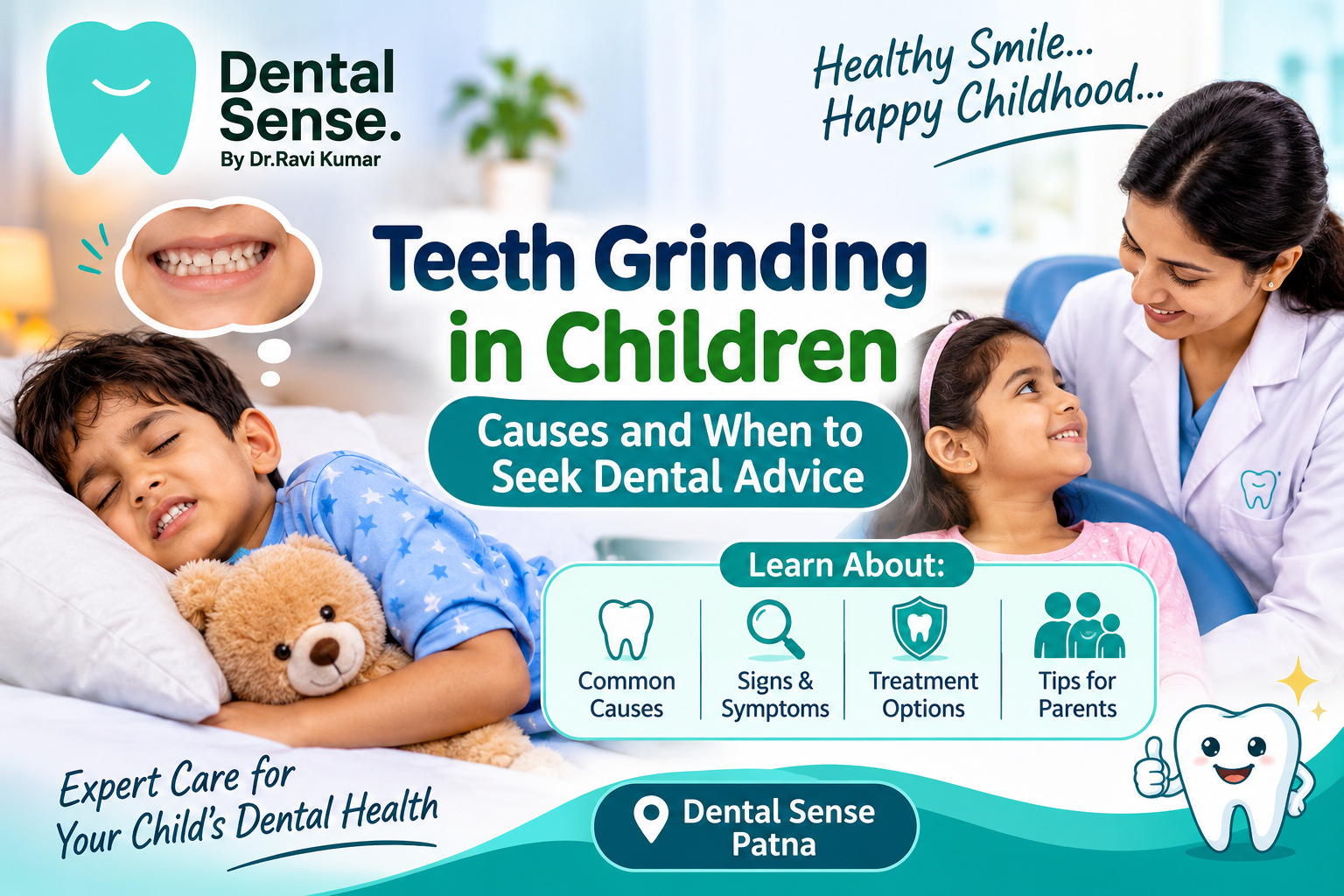
Have you ever heard your child making unusual grinding sounds while sleeping? Many parents notice this habit during the night and wonder whether it is something to worry about. Some children grind their teeth occasionally, while others may continue doing it for months.
Teeth grinding in children is a common dental concern. The medical term for this habit is bruxism. It can happen during sleep or while a child is awake. In many cases, children outgrow the habit as they grow older. However, frequent grinding can sometimes affect their teeth and jaw.
Understanding the possible causes and warning signs can help parents take the right steps. This guide explains why children grind their teeth, how it can affect their oral health and when parents should consult a dentist.
What Is Teeth Grinding in Children?
Teeth grinding in children, also known as bruxism, is a habit in which a child repeatedly clenches, rubs or presses their upper and lower teeth together. It often happens during sleep, so children may not even realise they are doing it.
There are two common forms of bruxism:
- Sleep bruxism: Grinding or clenching that happens while a child is sleeping.
- Awake bruxism: Clenching or pressing the teeth together while a child is awake, sometimes during concentration or stressful situations.
Parents often notice sleep bruxism because of the grinding sound coming from their child’s bedroom. However, some children grind their teeth quietly.
According to the American Academy of Pediatrics, teeth grinding is common in toddlers and preschool-aged children. Many children gradually outgrow this habit.
What Causes Teeth Grinding in Children?
There is no single cause of bruxism in every child. Several physical, emotional and sleep-related factors may contribute to this habit.
Understanding these factors can help parents observe their child’s behaviour and discuss any concerns with a dental professional.
1. Stress and Anxiety
Children can experience stress just like adults. Changes in school, family situations, friendships or daily routines may affect their emotional well-being.
Some children may respond to stress by clenching or grinding their teeth. They may not always know how to explain their feelings.
Parents can help by maintaining open communication and giving children a comfortable environment where they can discuss their worries.
2. Sleep-Related Problems
Sleep disturbances may be associated with teeth grinding in some children.
For example, children who experience snoring, breathing difficulties during sleep or interrupted sleep may also show signs of bruxism.
Parents should pay attention to unusual sleeping patterns. If a child snores regularly or appears to have breathing difficulties during sleep, discuss these concerns with a paediatrician.
3. Dental Development and Growing Teeth
Children experience several changes in their teeth as they grow. Baby teeth gradually fall out, and permanent teeth begin to appear.
During these changes, some children may develop temporary grinding habits. However, dental development alone does not explain every case of bruxism.
A dentist can examine the child’s teeth and check whether the grinding is causing unusual wear or discomfort.
4. Certain Health Conditions and Medicines
Some health conditions and prescribed medicines may be associated with teeth grinding.
Children with certain neurological or developmental conditions may experience bruxism. Some medicines may also contribute to the habit.
Parents should share information about their child’s health conditions and medicines during a dental appointment. Never stop or change a prescribed medicine without consulting the treating doctor.
5. Family History and Other Factors
Family history may also play a role in some cases. If parents or other family members have a history of teeth grinding, the child may have a higher chance of experiencing it.
Other possible contributing factors include oral discomfort and certain sleep-related conditions.
The exact reason may not always be clear. A proper assessment can help identify any associated dental or health concerns.
What Are the Common Signs of Bruxism in Children?
Some children show no clear symptoms apart from grinding sounds during sleep. Others may experience dental or jaw-related discomfort.
Parents should watch for these common signs:
- Grinding or scraping sounds during sleep.
- Flattened or worn tooth surfaces.
- Chipped or cracked teeth.
- Tooth sensitivity.
- Jaw soreness, especially after waking up.
- Facial discomfort.
- Headaches in the morning.
- Pain while chewing.
- Disturbed sleep.
Not every child will experience all these symptoms. However, repeated complaints of jaw pain or visible tooth damage should not be ignored.
The National Institute of Dental and Craniofacial Research also identifies tooth wear, tooth sensitivity, jaw discomfort and headaches as possible signs of bruxism.
Can Teeth Grinding Damage a Child’s Teeth?
Occasional teeth grinding may not cause serious problems. However, frequent or severe grinding can put extra pressure on the teeth and jaw muscles.
Here are some possible effects.
Damage to Baby Teeth
Frequent grinding may gradually wear down the surfaces of baby teeth. In some cases, it can cause sensitivity or discomfort.
Parents should arrange a dental examination if they notice unusual tooth wear or if their child complains about pain.
Effects on Permanent Teeth
Permanent teeth need proper care because they must last throughout adulthood.
Severe grinding may contribute to:
- Enamel wear.
- Chipped or cracked teeth.
- Increased tooth sensitivity.
- Jaw muscle discomfort.
- Dental pain.
Early dental assessment can help identify these problems and determine whether any treatment or monitoring is needed.
When Should Parents Seek Dental Advice?
Parents do not need to panic every time they hear their child grinding their teeth. However, certain signs indicate that a dental examination is important.
Consider consulting a dentist if your child:
- Grinds their teeth frequently or very loudly.
- Has visible tooth wear.
- Complains of jaw or facial pain.
- Experiences repeated headaches after waking up.
- Has sensitive, chipped or cracked teeth.
- Experiences discomfort while chewing.
- Has grinding habits that continue over time.
If your child snores regularly, has disturbed sleep or shows signs of breathing difficulties during sleep, a paediatrician may also need to assess the situation.
The NHS guide to teeth grinding recommends seeking dental advice if you are concerned about a child’s grinding habit, particularly when pain or tooth damage is present.
How Is Teeth Grinding in Children Diagnosed?
A dentist can assess the child’s teeth and identify possible signs of bruxism.
The examination may include the following steps:
1. Checking the Teeth
The dentist examines the tooth surfaces for unusual wear, cracks, chips and sensitivity.
2. Examining the Jaw
The dentist may check the jaw muscles, movement and any discomfort around the jaw joint.
3. Understanding Sleep Habits
Parents may be asked questions about grinding sounds, sleep quality, snoring and how frequently the habit occurs.
4. Reviewing Medical History
Information about medicines, health conditions and previous dental concerns can help the dentist understand possible contributing factors.
Depending on the findings, the dentist may recommend monitoring, dental care or consultation with a paediatrician.
How Can Parents Help Reduce Teeth Grinding in Children?
Parents can support their child’s overall health by encouraging healthy routines and paying attention to emotional and sleep-related concerns.
Here are some practical steps.
Maintain a Regular Bedtime Routine
Try to maintain consistent sleeping and waking times. A regular routine can help children develop healthier sleep habits.
Create a Calm Sleeping Environment
A quiet and comfortable bedroom can support better sleep.
Reading a story, listening to gentle music or spending some quiet time together before bedtime may help children relax.
Talk About Their Worries
If your child appears worried about school, friends or family matters, give them time to talk.
Listen patiently and avoid making them feel uncomfortable about their emotions.
Encourage Regular Dental Checkups
Routine dental visits help professionals monitor the development of baby teeth and permanent teeth.
A dentist can also identify signs of tooth wear before they become more serious.
Follow Professional Advice
Do not try to treat persistent teeth grinding with home remedies or adult dental appliances.
A dentist can recommend suitable care based on the child’s age, symptoms and dental development.
Does a Child Need a Night Guard for Teeth Grinding?
Not every child who grinds their teeth needs a night guard.
A night guard is a dental appliance that helps protect teeth from excessive contact during grinding. A dentist may consider an appropriate appliance if the child shows signs of significant tooth wear or other dental concerns.
However, children have growing jaws and changing teeth. Therefore, any dental appliance must be selected and monitored by a dental professional.
Parents should not purchase adult mouth guards or use unprescribed dental appliances for children.
The International Association of Paediatric Dentistry provides professional guidance on the management of bruxism in children.
Kids Dentistry in Patna: How Dental Sense Can Help
Children need regular dental care as their teeth and jaws continue to develop. A friendly dental environment can also help them feel more comfortable during examinations.
Dental Sense provides children’s dental care in Patna, with a focus on preventive care and comfortable dental visits.
Its Kids Dentistry services include:
- Children’s dental checkups.
- Cavity fillings.
- Fluoride treatments.
- Dental sealants.
- Early orthodontic assessments.
- Guidance on children’s oral hygiene.
If you notice frequent teeth grinding, tooth sensitivity or jaw discomfort in your child, a dental examination can help identify possible problems.
You can explore the Kids Dentistry services at Dental Sense to learn more about children’s dental care.
Dental Sense is located in Kankarbagh, Patna, Bihar. Parents can also visit the Dental Sense website to learn about its dental services and appointment options.
Key Takeaways
- Teeth grinding in children is medically known as bruxism.
- It can happen during sleep or while a child is awake.
- Stress, sleep disturbances and other factors may contribute to teeth grinding.
- Frequent grinding can cause tooth wear, sensitivity and jaw discomfort.
- Not every child needs a night guard or active treatment.
- Parents should consult a dentist if they notice persistent grinding or visible tooth damage.
- Regular dental checkups help monitor children’s oral health.
Frequently Asked Questions About Teeth Grinding in Children
1. Why do children grind their teeth at night?
Children may grind their teeth because of several factors, including stress, sleep disturbances, dental development and certain health conditions. The exact cause is not always clear, and each child may have different contributing factors.
2. Is teeth grinding normal in young children?
Teeth grinding is relatively common in toddlers and preschool-aged children. Many children gradually stop this habit as they grow older. However, persistent grinding with pain or tooth damage should be checked by a dentist.
3. Can stress cause bruxism in children?
Yes. Stress and anxiety may contribute to bruxism in some children. School pressure, family changes and social concerns can affect their emotional well-being. However, stress is not the only possible cause.
4. Can teeth grinding damage baby teeth?
Frequent or severe grinding can wear down baby teeth and sometimes cause sensitivity or discomfort. A dentist can examine the teeth and determine whether the grinding is causing damage.
5. How can I stop my child from grinding their teeth at night?
Parents can encourage a regular bedtime routine, create a calm sleeping environment and discuss any worries with their child. If grinding continues or causes discomfort, consult a dentist for appropriate guidance.
6. Does every child with bruxism need a night guard?
No. Many children do not need a night guard. A dentist should examine the child’s teeth and consider their age, dental development and symptoms before recommending an appliance.
7. When should I take my child to a dentist for teeth grinding?
Consult a dentist if your child has frequent grinding, visible tooth wear, jaw pain, headaches, tooth sensitivity or chipped teeth. Early assessment can help identify dental problems.
8. Where can I find kids dentistry in Patna?
Parents can visit Dental Sense in Kankarbagh, Patna, for children’s dental care. The clinic offers Kids Dentistry services, including dental checkups, fluoride treatments, cavity fillings and preventive care.