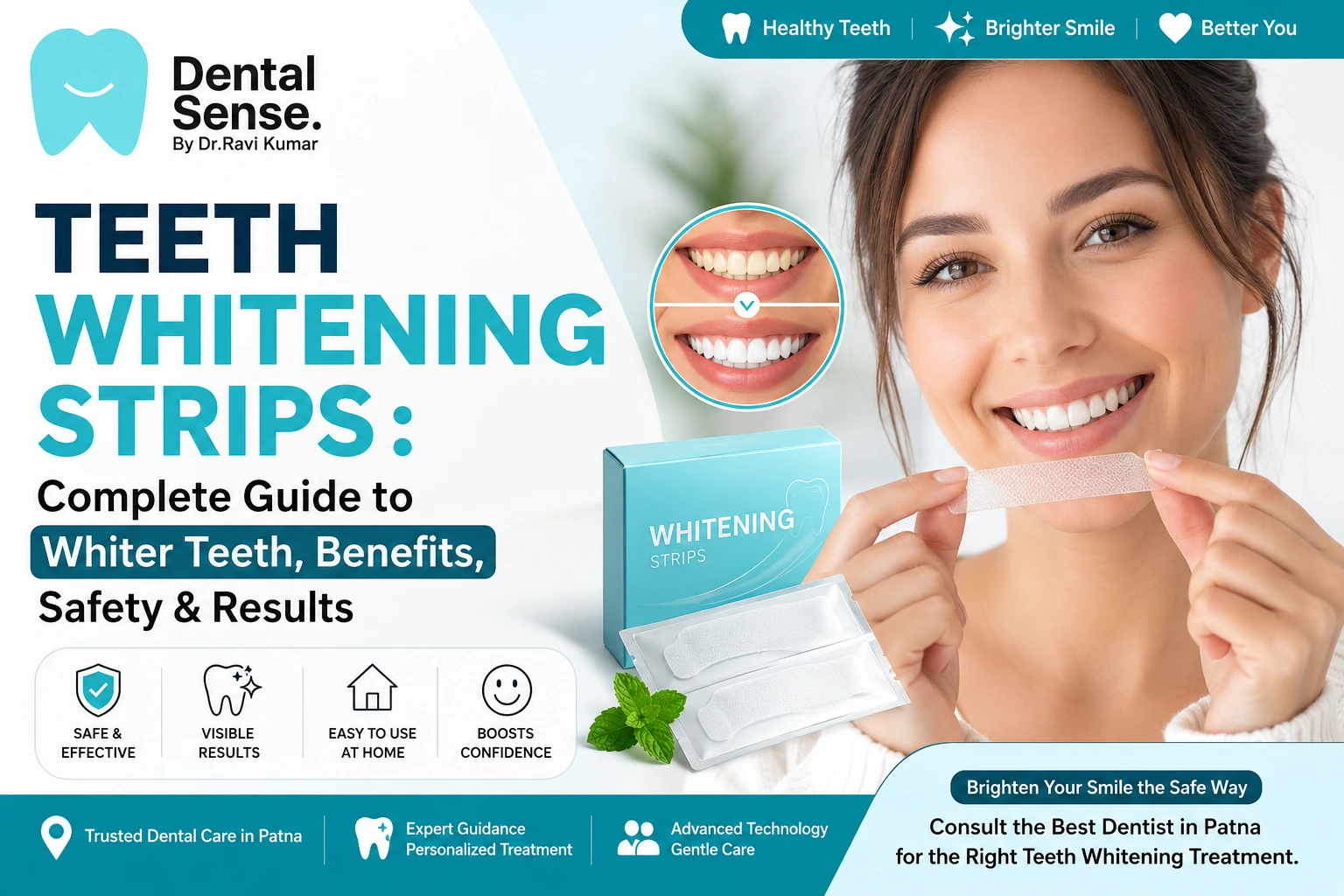
A bright smile can make you feel more confident, which is why teeth whitening strips have become a popular at-home option for people who want to improve the colour of their teeth. They are easy to find, simple to apply, and usually cost less than professional whitening.
But do whitening strips really work? Are they safe for your enamel? What if you have sensitive teeth?
These are important questions to consider before using any whitening product. Whitening strips can help lighten natural teeth, but results depend on the type of staining, the product used, and the condition of your teeth and gums. Tooth sensitivity and gum irritation are also common temporary side effects of tooth whitening.
If you are considering teeth whitening treatment in Patna, understanding these factors can help you make a better decision.
What Are Teeth Whitening Strips?
Teeth whitening strips are thin, flexible strips coated with a whitening gel that are designed to lighten the colour of natural teeth. Many whitening products use peroxide-based ingredients such as hydrogen peroxide or carbamide peroxide to help break down compounds responsible for tooth discolouration.
Whitening strips are generally designed for home use. They are different from professional whitening because they are usually used without direct dental supervision.
The result can vary from person to person. Some people may notice a visible improvement, while others may need a different whitening approach depending on the cause of their tooth discolouration.
How Do Teeth Whitening Strips Work?
Many whitening strips use peroxide-based ingredients. These ingredients interact with the compounds that cause darker tooth colour and help lighten the appearance of the teeth.
Tooth stains generally fall into two broad categories.
Surface Stains
Surface, or extrinsic, stains can develop from things such as:
- Tea and coffee
- Tobacco
- Dark-coloured foods and drinks
- Poor oral hygiene
- Certain lifestyle habits
Deeper Tooth Discolouration
Some colour changes happen inside the tooth. Ageing, certain medications, dental conditions, and changes that occur during tooth development can contribute to deeper discolouration.
Whitening strips may not provide the same result for every type of stain. A dentist can help determine why your teeth have changed colour and whether whitening is suitable.
Do Teeth Whitening Strips Really Work?
Yes, teeth whitening strips can whiten natural teeth, and clinical research supports their effectiveness. However, the amount of whitening varies depending on the product, treatment use, starting tooth colour, and type of staining.
Whitening strips usually require repeated use according to the product instructions. They are not designed to produce permanent results after one application.
The important point is to have realistic expectations. Whitening means making teeth lighter. It does not necessarily mean achieving an extremely white or completely uniform smile.
How to Use Teeth Whitening Strips Safely
If you choose to use whitening strips, follow the instructions provided with the specific product.
1. Read the Product Instructions
Different products have different formulations and recommended application methods. Do not assume that every whitening strip should be used in the same way.
2. Apply the Strips as Directed
Place the strips according to the manufacturer’s instructions. Avoid unnecessary contact between the whitening gel and your gums.
3. Do Not Use Them More Than Recommended
Using a whitening product more often or for longer than instructed does not automatically produce better results. Excessive whitening can increase the risk of sensitivity and irritation.
4. Pay Attention to Discomfort
Mild, temporary sensitivity can occur during whitening. If you experience significant or persistent discomfort, stop the treatment and speak with a dentist.
For people with existing dental problems or sensitive teeth, getting professional advice before whitening is especially important.
Are Teeth Whitening Strips Safe?
Teeth whitening strips can be safe when an appropriate product is used correctly, but they are not suitable for every person or every dental condition.
The most common side effects of tooth whitening include temporary tooth sensitivity and gum irritation.
The risk can increase when whitening products are used incorrectly or excessively.
This is why a dental examination can be useful before starting a whitening treatment. A dentist can check for cavities, gum problems, existing sensitivity, and dental restorations that may affect the final result.
Can Teeth Whitening Strips Damage Enamel?
It is not accurate to say that every whitening strip will damage enamel. However, excessive or inappropriate whitening can affect oral tissues and may increase the risk of unwanted effects.
Using a product exactly as directed is important. If you are unsure whether whitening is appropriate for your teeth, consult a dental professional.
Can Whitening Strips Cause Tooth Sensitivity?
Yes. Tooth sensitivity is one of the most common temporary side effects associated with tooth whitening. It can occur during or shortly after whitening and is often temporary.
People who already have sensitive teeth should be particularly careful. A dentist can help identify the reason for sensitivity before recommending a whitening approach.
Can Whitening Strips Irritate the Gums?
Yes. Whitening gel can irritate the gums when it comes into contact with gum tissue. Improper application can increase this risk.
If your gums become irritated or uncomfortable, stop using the product and seek dental advice if the problem continues.
Are Teeth Whitening Strips Suitable for Sensitive Teeth?
People with sensitive teeth should not automatically assume that whitening strips are suitable for them.
Sensitivity can have different causes. It may be related to enamel wear, gum recession, cavities, exposed tooth surfaces, or other dental conditions.
Before using teeth whitening strips for sensitive teeth, consider speaking with a dentist. A dental examination can help identify the cause of sensitivity and determine whether whitening is appropriate.
A dentist may also discuss alternative whitening options or ways to manage sensitivity based on your individual dental condition.
Can Whitening Strips Whiten Crowns, Veneers or Implants?
No. Whitening strips whiten natural tooth structure. They do not whiten tooth-coloured restorations in the same way. Crowns, veneers, and other restorations generally retain their existing color.
This is important if you have visible dental restorations.
For example, if your natural teeth become lighter but a front crown stays the same colour, the two may no longer match.
A dentist can check your restorations before whitening and explain what result you can realistically expect.
Who Should Talk to a Dentist Before Whitening?
A dental consultation is particularly useful if you have:
- Sensitive teeth
- Cavities or suspected tooth decay
- Gum problems
- Damaged teeth
- Existing crowns or veneers
- Dental implants
- Significant tooth discolouration
- Previous problems with whitening
Whitening is a cosmetic procedure, but the health of your teeth and gums still matters.
The NHS also advises that professional whitening should only be carried out when the teeth and gums are healthy and notes that whitening is not suitable for people aged 17 or younger.
Teeth Whitening Strips vs Professional Teeth Whitening
Many people compare teeth whitening at home with professional whitening from a dentist.
| Feature | Whitening Strips | Professional Whitening |
| Location | Usually at home | Dental clinic or dentist-supervised |
| Supervision | Usually self-use | Professional guidance |
| Treatment | Gradual | Can be faster |
| Personalisation | Limited | Can be tailored |
| Dental examination | Not always included | Dentist can assess teeth first |
| Sensitivity guidance | Product dependent | Dentist can provide guidance |
| Restorations | Do not whiten like natural teeth | Do not whiten like natural teeth |
Over-the-counter whitening products can work, but professional whitening can offer more controlled treatment and a more personalised approach.
The best option depends on your dental health, the type of staining, your sensitivity, and your desired result.
Is Professional Teeth Whitening Better Than Whitening Strips?
There is no single answer that applies to everyone.
Whitening strips may suit someone looking for a gradual at-home option. Professional treatment may be more suitable for someone who wants a dentist to assess their teeth and provide a personalised treatment plan.
Professional whitening can also be useful when:
- You have sensitive teeth.
- You have dental restorations.
- You have an unclear cause of tooth discolouration.
- You want professional supervision.
- You want to discuss faster whitening options.
The ADA notes that over-the-counter products can take longer than professional approaches to achieve similar levels of whitening.
How Long Do Teeth Whitening Results Last?
Teeth whitening is not permanent. Results can gradually fade as new stains develop and natural tooth colour changes.
Coffee, tea, tobacco, and other staining foods and drinks can contribute to new discolouration. Good oral hygiene and regular dental visits can help maintain a cleaner and brighter smile.
How long whitening lasts depends on factors such as:
- Your diet
- Oral hygiene
- Tobacco use
- Type of whitening treatment
- Natural tooth colour
- Staining habits
Instead of repeatedly whitening your teeth without guidance, follow the product instructions and discuss maintenance with your dentist.
How to Maintain Whiter Teeth After Whitening
Once you have achieved the desired result, simple habits can help maintain your smile.
Maintain Good Oral Hygiene
Brush your teeth regularly with a suitable toothpaste and clean between your teeth as recommended by your dentist.
Limit Staining Habits
Frequent consumption of coffee, tea, tobacco, and highly pigmented foods can contribute to new stains.
Visit Your Dentist Regularly
Regular dental check-ups can help identify problems early and keep your teeth and gums healthy.
Avoid Excessive Whitening
More whitening is not always better. Repeated or excessive use can increase the risk of sensitivity and other unwanted effects.
When Should You Choose Professional Teeth Whitening Treatment?
Professional teeth whitening treatment may be worth considering when you want a dentist to assess your teeth before whitening.
It can be especially useful when you:
- Have sensitive teeth
- Have existing dental restorations
- Are unsure about the cause of staining
- Want a personalised treatment plan
- Have tried home whitening without the expected result
A dental examination can help determine whether whitening is appropriate and whether any dental problem should be treated first.
Teeth Whitening Treatment at Dental Sense in Patna
If you are looking for the best dentist in Patna for advice about teeth whitening, start with a proper dental consultation rather than choosing a whitening product only because of its price or advertising.
At Dental Sense, patients can discuss their concerns about tooth colour, sensitivity, stains, and available whitening options.
A dental consultation can help you understand:
- The possible cause of tooth discolouration
- Whether whitening is suitable
- Whether sensitivity needs attention
- How existing restorations may affect the result
- Which whitening approach may suit your dental needs
- How to maintain the result
If you are considering teeth whitening in Patna, professional guidance can help you choose an option based on your actual dental condition.
Key Takeaways
- Teeth whitening strips can lighten natural teeth.
- Results vary depending on the type of stain and the product used.
- Whitening strips commonly use peroxide-based whitening agents.
- Temporary sensitivity and gum irritation are common side effects.
- People with sensitive teeth should consider dental advice before whitening.
- Whitening strips do not whiten crowns, veneers, or implants like natural teeth.
- Excessive whitening can increase the risk of unwanted effects.
- Professional whitening provides dentist assessment and guidance.
- Whitening results are not permanent.
- A dental check-up can help you choose a safe and suitable whitening option.
Frequently Asked Questions About Teeth Whitening Strips
Do teeth whitening strips really work?
Yes. Clinical research supports the ability of whitening strips to lighten natural teeth. Results vary between individuals and depend on factors such as the product, treatment use, and type of staining.
Are teeth whitening strips safe?
They can be safe when an appropriate product is used according to its instructions. Temporary tooth sensitivity and gum irritation are common potential side effects. People with existing dental problems should consult a dentist before whitening.
How do you use teeth whitening strips?
Follow the instructions provided with the specific product. Apply the strips as directed and avoid using them more frequently or for longer than recommended. If significant discomfort occurs, stop using the product and seek dental advice.
Can I use teeth whitening strips if I have sensitive teeth?
People with sensitive teeth should be cautious. Sensitivity can have an underlying dental cause, so speaking with a dentist before whitening can help determine whether the treatment is suitable.
Can whitening strips damage enamel?
Whitening products should not be overused. Excessive whitening can increase the risk of oral problems, including sensitivity and enamel changes. Follow product instructions and seek professional advice if you are unsure about whitening.
Can whitening strips whiten crowns?
No. Whitening products affect natural teeth and do not change the colour of tooth-coloured restorations such as crowns in the same way.
How long do teeth whitening results last?
Whitening results are not permanent. Their duration depends on diet, oral hygiene, staining habits, the whitening method, and individual tooth characteristics.
Which is better: whitening strips or professional whitening?
It depends on your needs. Whitening strips offer a convenient at-home option, while professional whitening provides dental assessment and professional supervision. A dentist can help you choose the appropriate approach.
What is the best teeth whitening treatment in Patna?
The best treatment depends on your tooth colour, type of staining, sensitivity, oral health, and dental restorations. A dental examination is the best starting point for choosing a suitable whitening treatment.