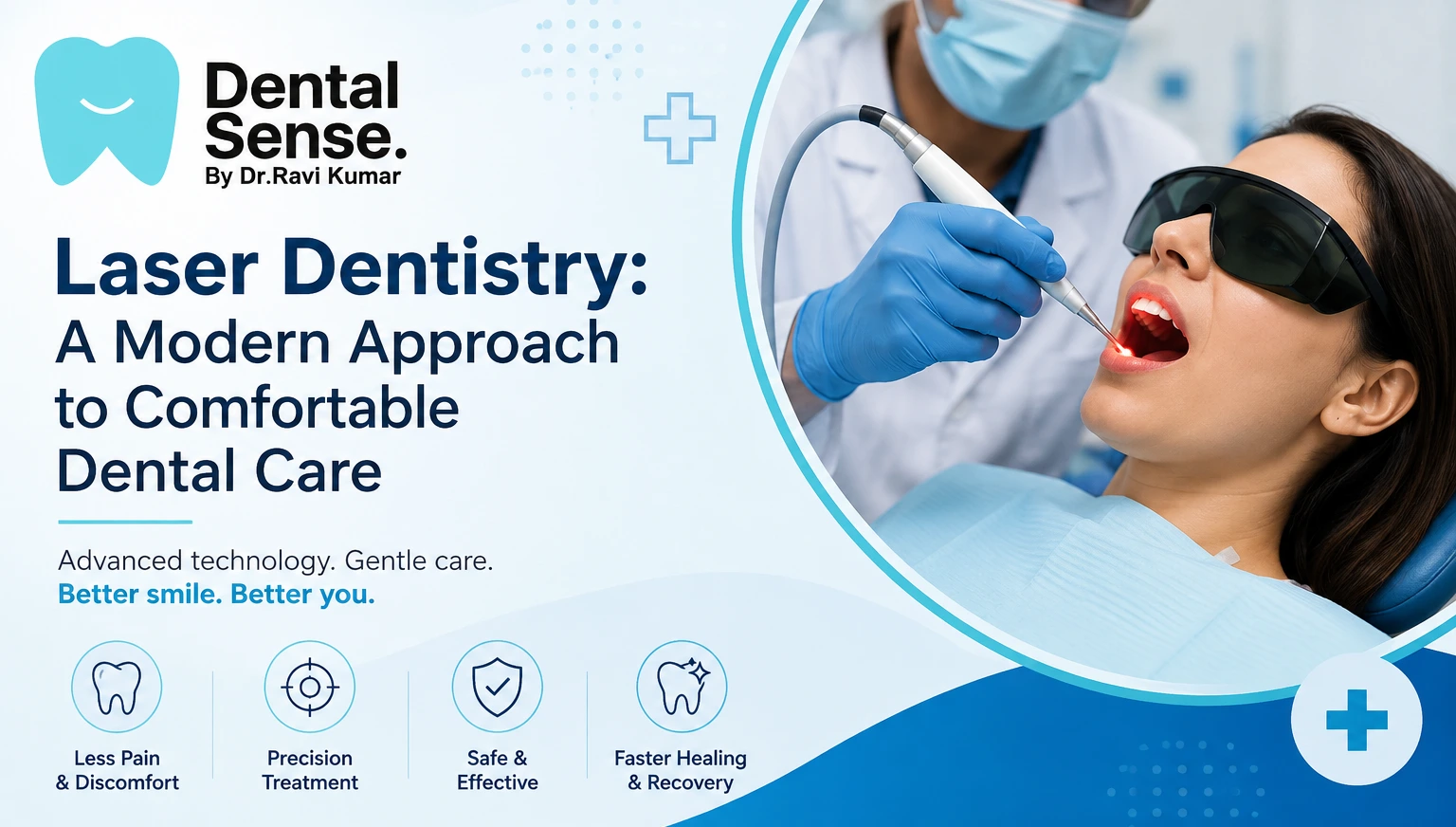
Going to the dentist can make some people nervous. The sound of dental instruments, the thought of injections, or the fear of discomfort can make patients delay treatment. However, dental technology has changed a lot in recent years. Dentists now have access to modern tools that can make certain procedures more precise and comfortable.
Laser dentistry is one such technology. It uses focused light energy for selected dental procedures involving the teeth and gums. Depending on the treatment, dental lasers can help a dentist work on specific areas with good precision.
For people looking for comfortable and modern dental care in Patna, laser dentistry can be an option worth discussing with a qualified dentist. But is it suitable for everyone? What can a dental laser actually treat? Is it really painless?
Let’s understand laser dentistry in simple terms.
What Is Laser Dentistry?
Laser dentistry is a dental treatment method that uses a concentrated beam of light to treat certain areas of the mouth. Dentists can use different types of lasers for procedures involving soft tissues, gums and, in selected cases, hard tissues such as teeth.
The laser delivers energy to a specific treatment area. This allows the dentist to work on the targeted tissue without relying only on traditional dental instruments.
Laser dentistry does not mean that every dental procedure can be performed with a laser. Traditional dental tools are still important and remain the right choice for many treatments.
The dentist first examines the patient’s oral health and then decides which treatment method is most suitable.
How Does Laser Dentistry Work?
A dental laser produces focused light energy. Depending on the type of laser and the procedure, this energy can interact with soft or hard tissue.
Before treatment, the dentist examines the teeth and gums and discusses the patient’s concerns. The dentist then selects the appropriate treatment approach.
A typical laser dental treatment may involve these steps:
- Dental examination: The dentist checks the teeth, gums and overall oral health.
- Treatment planning: The dentist decides whether laser treatment is appropriate.
- Preparation: The treatment area is prepared according to the procedure.
- Laser treatment: The dentist uses the dental laser on the required area.
- Aftercare: The patient receives instructions for care after treatment.
The exact process depends on the dental problem and the type of procedure being performed.
What Dental Problems Can Laser Treatment Help With?
Laser technology has several applications in dentistry. However, its use depends on the patient’s condition and the type of laser available.
Gum Disease Treatment
Dentists may use lasers as part of treatment for certain gum conditions. The laser can be used to work on infected or affected gum tissue in selected cases.
Gum disease treatment usually involves a complete assessment of the gums. Your dentist may recommend laser treatment, conventional treatment or a combination of approaches based on your condition.
Gum Reshaping
Some patients have excess gum tissue or an uneven gum line. In selected cosmetic or dental procedures, a laser can be used to reshape gum tissue.
The dentist carefully removes or reshapes the required tissue to achieve the planned result.
Soft Tissue Procedures
Dental lasers can be useful for certain procedures involving the soft tissues inside the mouth. These may include selected treatments involving the gums and other oral tissues.
The suitability of laser treatment depends on the specific problem.
Treatment of Certain Tooth Problems
Some dental lasers can be used for selected procedures involving hard dental tissues. These may include certain cavity-related procedures.
However, laser treatment is not automatically better for every cavity or tooth problem. The dentist needs to examine the tooth before deciding on the appropriate treatment.
Cosmetic Dental Procedures
Laser or light-based technology may also be used alongside certain cosmetic dental procedures, depending on the treatment system and dental clinic.
For example, some teeth whitening systems use specialised light technology. Patients should ask their dentist exactly what technology will be used and what results they can reasonably expect.
What Are the Benefits of Laser Dentistry?
Laser dentistry can offer several advantages in appropriate cases. The benefits depend on the procedure, the technology used and the patient’s oral health.
1. It Can Make Some Treatments More Comfortable
One of the biggest reasons patients ask about laser dentistry is comfort.
Certain laser procedures may cause less discomfort than some traditional approaches. However, this does not mean every laser procedure is completely painless.
Your experience can depend on the treatment area, your sensitivity and the type of procedure.
2. Precise Treatment
A dental laser can deliver energy to a targeted area. This allows the dentist to work carefully on the planned treatment area.
Precision can be particularly useful for selected soft-tissue procedures.
3. Less Bleeding During Some Procedures
Laser energy can help control bleeding during certain soft-tissue treatments. This can make the treatment area easier for the dentist to manage.
The amount of bleeding depends on the procedure and the patient’s individual condition.
4. Potentially Easier Recovery
Some laser procedures may involve less tissue trauma than certain conventional techniques. This may support a comfortable recovery in suitable cases.
However, recovery time varies from patient to patient and depends heavily on the treatment performed.
5. Reduced Use of Some Traditional Instruments
Depending on the procedure, a laser may reduce the need for certain conventional instruments.
This can be helpful for patients who feel anxious about the sound or sensation associated with some dental tools.
6. Useful for Selected Gum Treatments
Lasers can have specific applications in periodontal and soft-tissue care. A dentist may consider laser technology when it fits the patient’s treatment plan.
The key point is that the technology should support the treatment plan rather than replace proper diagnosis.
Is Laser Dentistry Really Painless?
This is one of the most common questions patients ask.
Laser dentistry can make some dental procedures more comfortable, but it does not mean that every laser treatment is completely painless.
The level of discomfort depends on several factors. These include the type of procedure, the treatment area, the patient’s sensitivity, and the condition being treated.
Some procedures may require local anesthesia, while others may not. Your dentist will explain what to expect before starting treatment.
If you feel anxious about dental treatment, tell your dentist. A good discussion before the procedure can help you understand what will happen and make the experience more comfortable.
Laser Dentistry vs Traditional Dental Treatment
Laser technology and traditional dental methods both have an important role in modern dentistry.
| Factor | Laser Dentistry | Traditional Dental Treatment |
| Technology | Uses focused laser energy | Uses conventional dental instruments |
| Precision | Can provide targeted treatment for selected procedures | Depends on the procedure and instruments used |
| Comfort | May be more comfortable for some procedures | Comfort varies by treatment |
| Bleeding | May reduce bleeding during some soft-tissue procedures | Bleeding varies according to the procedure |
| Recovery | May support easier recovery in selected cases | Depends on the treatment |
| Suitability | Used for specific dental procedures | Used across a wide range of dental treatments |
There is no single treatment method that is best for every patient.
A dentist should choose the treatment based on your dental condition, not simply because a particular technology is available.
Is Laser Dentistry Safe?
Laser dentistry has established applications in dental care, but safety depends on using the correct equipment, settings and technique.
A trained dental professional should assess your condition before recommending laser treatment.
During treatment, the dentist should follow appropriate safety procedures. Eye protection may also be required depending on the type of laser being used.
It is important to remember that modern technology does not remove the need for proper dental diagnosis. The dentist must first understand the problem and then select the appropriate treatment.
What Should You Expect During Laser Dental Treatment?
Knowing what will happen can make a dental appointment feel much easier.
Step 1: Dental Examination
The dentist examines your teeth, gums and oral health. Depending on your problem, dental X-rays or other diagnostic tests may be recommended.
Step 2: Treatment Discussion
The dentist explains the available treatment options and tells you whether laser dentistry is suitable for your case.
Step 3: Preparation
The treatment area is prepared before the procedure. The dentist may use local anaesthesia when required.
Step 4: Laser Treatment
The dentist uses the appropriate dental laser on the planned area. The duration depends on the procedure.
Step 5: Aftercare
After treatment, the dentist explains how to care for the treated area. You should follow these instructions carefully.
If you have questions or feel uncomfortable at any stage, let your dentist know.
How Long Does Laser Dental Treatment Take?
There is no fixed time for every laser dental treatment.
A simple procedure may take less time than a more involved treatment. The duration can depend on:
- The type of dental problem
- The treatment area
- Number of teeth involved
- Condition of the gums
- Complexity of the procedure
- Whether additional dental treatment is required
Your dentist can give you a more accurate estimate after examining your teeth and gums.
What Is Recovery Like After Laser Dentistry?
Recovery depends on the treatment you receive.
Some patients may experience mild sensitivity or tenderness after certain procedures. Your dentist will explain what you should expect and provide specific aftercare instructions.
For a smoother recovery:
- Follow your dentist’s instructions.
- Maintain good oral hygiene as advised.
- Avoid irritating the treated area.
- Take medicines only as prescribed or recommended by your dentist.
- Attend follow-up appointments when required.
If you experience unexpected or persistent symptoms after treatment, contact your dental clinic for advice.
How Much Does Laser Dentistry Cost in Patna?
The cost of laser dentistry in Patna can vary from one patient to another.
There is no single price for all laser dental treatments because the final cost depends on the type of procedure and the patient’s dental condition.
Factors that can affect the cost include:
- Type of laser treatment
- Number of teeth or gum areas treated
- Complexity of the procedure
- Diagnostic tests
- Dental materials used
- Follow-up treatment
The best way to understand the cost is to have a dental examination first. The dentist can then explain the recommended treatment and provide the applicable treatment charges.
Who Can Benefit From Laser Dentistry?
Laser dentistry can be considered for patients who need certain dental procedures involving the gums, soft tissues or selected tooth-related treatments.
It may be an option for people who are looking for modern dental treatment and want to discuss alternatives to conventional methods.
However, laser treatment is not suitable for every dental problem.
The right approach depends on your oral health, the type of treatment you need and the dentist’s clinical assessment.
Why Choose Modern Dental Care in Patna?
Technology is only one part of good dental care. The experience of the dental team, proper diagnosis, hygiene, communication and treatment planning are equally important.
If you are considering laser dental treatment in Patna, choose a dental clinic where the dentist explains your condition and discusses the available options clearly.
At Dental Sense | Best Dentist in Patna, patients can discuss their dental concerns with the dental team and understand the treatment options available for their specific needs.
Instead of choosing a treatment only because it is advertised as modern or painless, ask your dentist why that treatment is suitable for your condition.
Key Takeaways About Laser Dentistry
Here are the main points to remember:
- Laser dentistry uses focused light energy for selected dental procedures.
- It can be used for certain treatments involving teeth, gums and soft tissues.
- Some patients may experience greater comfort with specific laser procedures.
- Laser dentistry is not completely painless in every case.
- Traditional dental tools are still important for many treatments.
- Treatment suitability depends on your dental condition .
- Recovery varies according to the procedure.
- A dental examination is the best way to determine whether laser treatment is suitable for you.
- Patients in Patna can discuss laser dental treatment with a qualified dentist before making a decision.
Frequently Asked Questions About Laser Dentistry
What is laser dentistry?
Laser dentistry is a dental treatment approach that uses focused light energy for selected procedures involving the teeth and soft tissues of the mouth. Dentists may use different laser systems depending on the treatment required.
Is laser dentistry painless?
Laser dentistry can make some procedures more comfortable, but it is not completely painless in every case. The level of discomfort depends on the treatment, treatment area and individual sensitivity.
What is laser dental treatment used for?
Laser dental treatment can be used for selected procedures involving gums, soft tissues and certain hard-tissue dental treatments. The dentist decides whether laser technology is appropriate after examining the patient’s oral health.
Is laser dentistry safe?
Laser dentistry can be safe when the appropriate equipment and techniques are used by a trained dental professional. Proper diagnosis, treatment planning and safety procedures are important.
Is laser dentistry better than traditional treatment?
Laser dentistry is not automatically better than traditional treatment. The best option depends on the dental problem, treatment requirements and patient’s condition. A dentist can recommend the most appropriate approach after an examination.
How long does laser dental treatment take?
The treatment time depends on the type and complexity of the procedure. A dentist can provide a more accurate estimate after examining the treatment area.
Does laser dentistry require anaesthesia?
Some laser procedures may require local anaesthesia, while others may not. The need for anaesthesia depends on the treatment and the patient’s sensitivity.
Is laser dentistry suitable for everyone?
No. Laser dentistry is not required or suitable for every dental problem. A dentist should assess your teeth and gums before recommending laser treatment.
Where can I get laser dentistry in Patna?
If you are looking for laser dentistry in Patna, start by consulting a qualified dentist. Dental Sense can help you understand your dental condition and discuss whether modern laser-based treatment is appropriate for your needs.
Final Thoughts
Laser dentistry has added another useful technology to modern dental care. It can provide precise treatment and may improve comfort during certain dental procedures.
But the technology itself is not the most important factor. The right diagnosis, experienced dental care and a treatment plan suited to your condition matter more.
If you are considering laser dentistry in Patna, talk to a dentist about your concerns and ask whether laser dental treatment is appropriate for you. A proper consultation can help you understand your options and make a confident decision about your oral health.