Have you ever had a small sore inside your mouth that suddenly makes eating painful? Even a tiny ulcer can be quite irritating. Drinking tea, eating spicy food, brushing your teeth, or even talking can become uncomfortable.
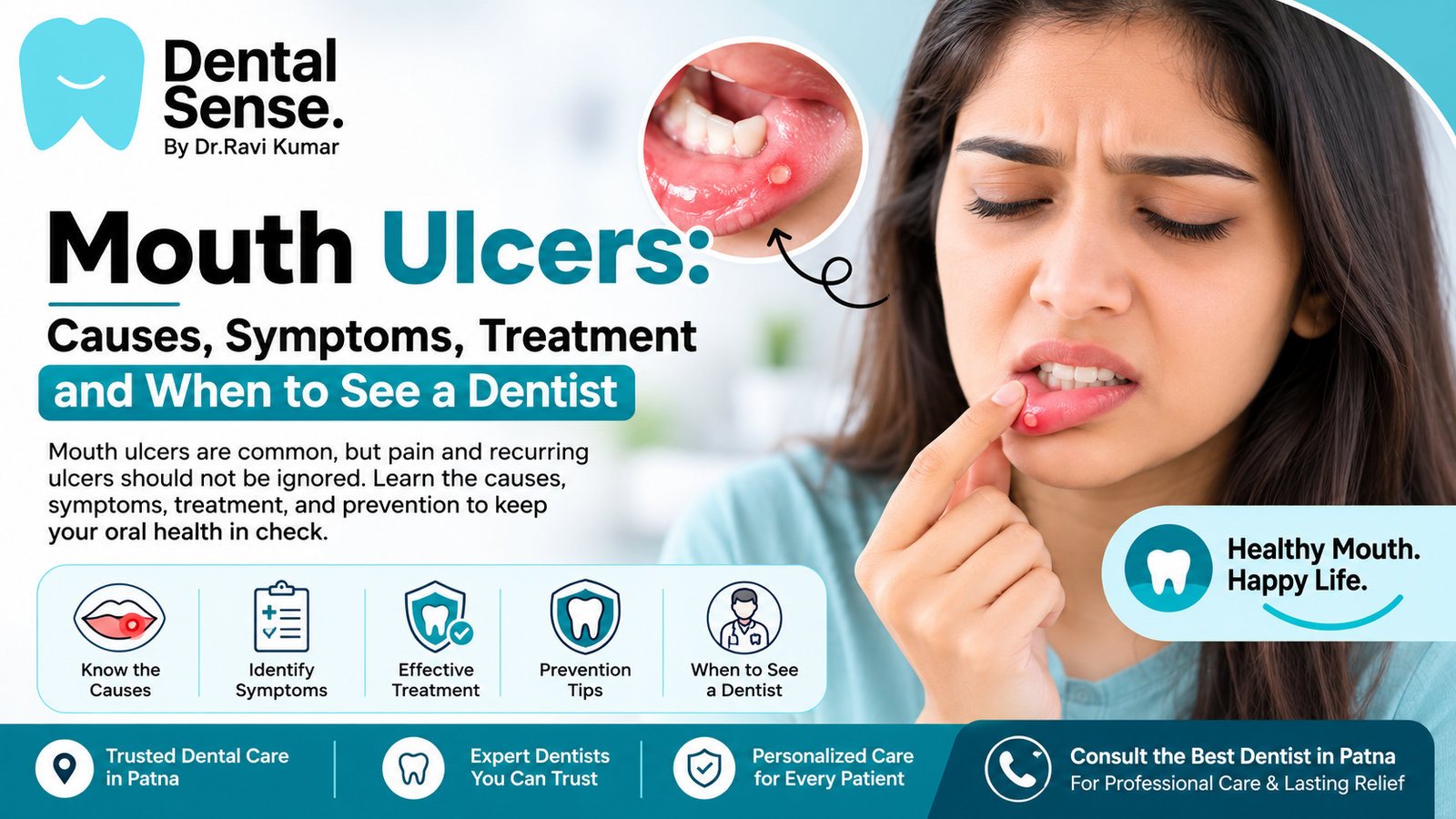
Mouth ulcers are very common, and most of them are not serious. They can appear inside the cheeks, on the lips, tongue, gums, or other soft parts of the mouth. In many cases, they disappear on their own within a week or two.
But what if they keep coming back? What if an ulcer does not heal? Or what if the pain becomes difficult to manage?
These are situations where you should pay more attention.
In this guide, we will discuss the causes of mouth ulcers, common symptoms, treatment options, prevention tips, and when you should visit a dentist. If you are in Patna and dealing with recurring or persistent mouth ulcers, a dental check-up can help you understand what may be causing the problem.
What Are Mouth Ulcers?
A mouth ulcer is a small sore that develops inside the mouth. It may look like a round or oval wound with a white, yellowish, or grey centre and a red area around it.
You can develop an ulcer on:
- The inside of your cheek
- Inner side of the lips
- Tongue
- Gums
- Floor of the mouth
- Other soft tissues inside the mouth
Some ulcers are barely noticeable, while others can be painful enough to affect your daily routine.
The good news is that many common mouth ulcers heal without major treatment. However, an ulcer that stays for a long time or keeps returning needs proper attention.
What Causes Mouth Ulcers?
There is no single reason behind every mouth ulcer. Sometimes the cause is easy to identify, while in other cases, several factors may be involved.
Accidental Biting or Mouth Injury
One of the most common reasons is simple injury.
You may accidentally bite your cheek while eating. A sharp tooth, broken filling, rough food, or dental appliance can also rub against the soft tissues and create a sore.
If the same area gets irritated again and again, the ulcer may take longer to heal.
Stress and Lack of Rest
Some people notice that mouth ulcers appear during stressful periods. Lack of proper rest may also be associated with recurring ulcers in certain individuals.
Stress is not the only cause, though. If you frequently develop ulcers, it is worth looking at your overall oral health and other possible factors.
Nutritional Deficiencies
Certain nutritional deficiencies may be linked with recurring mouth ulcers.
For example, low levels of iron, vitamin B12, or folate may contribute to oral problems in some people.
If you regularly get mouth ulcers, do not start taking supplements without knowing whether you actually need them. A healthcare professional can advise you if testing or further evaluation is appropriate.
Certain Medicines
Some medicines can cause changes in the mouth or contribute to mouth sores.
If you started getting ulcers after beginning a new medicine, talk to your doctor or pharmacist. Never stop a prescribed medicine without professional advice.
Hormonal Changes
Hormonal changes can affect the body in different ways. Some people notice changes in their oral health during certain hormonal periods, including a tendency towards recurring mouth ulcers.
Other Health Conditions
Recurring mouth ulcers can sometimes be associated with other health conditions.
This does not mean that a recurring ulcer automatically indicates a serious problem. However, if your ulcers are frequent, severe, unusually large, or accompanied by other symptoms, you should get them checked.
What Are the Symptoms of Mouth Ulcers?
The appearance and symptoms can vary from one person to another.
Common symptoms include:
- A small sore inside the mouth
- Pain or tenderness
- Burning sensation
- Redness around the sore
- Discomfort while eating
- Pain when brushing
- Difficulty speaking if the ulcer is in a sensitive area
Spicy, salty, acidic, or very hot foods may make the discomfort worse.
If you notice a sore that looks different from your usual ulcers or does not seem to be healing, it is better to get professional advice.
How Long Do Mouth Ulcers Last?
Most ordinary mouth ulcers improve within one to two weeks. The exact healing time can vary depending on the size of the ulcer, its cause, its location, and your general health.
A small ulcer may become less painful after a few days and gradually disappear.
However, you should not simply wait indefinitely.
If an ulcer continues for around two weeks without healing, becomes worse, or keeps returning, speak to a dentist or doctor. Persistent mouth sores deserve proper examination.
How Are Mouth Ulcers Treated?
The right treatment depends on why the ulcer developed.
For a small and uncomplicated ulcer, the main focus is usually to keep the area clean and avoid further irritation while it heals.
Keep Your Mouth Clean
Do not stop brushing your teeth because you have an ulcer. Instead, brush gently and avoid being too harsh around the sore.
Good oral hygiene helps keep your teeth and gums healthy and reduces unnecessary irritation.
Avoid Foods That Make It Hurt
If a particular food makes the ulcer painful, avoid it for a few days.
Common irritants include:
- Very spicy foods
- Acidic foods
- Very salty foods
- Hard or crunchy foods
- Very hot foods and drinks
You can return to your normal diet once the area feels comfortable again.
Drink Enough Water
Keeping yourself hydrated is especially useful when eating and drinking become uncomfortable.
Choose comfortable, non-irritating drinks and avoid anything that clearly makes the ulcer sting.
Dental Treatment When Needed
Sometimes the ulcer keeps returning because something inside the mouth is constantly irritating it.
For example, a sharp tooth may repeatedly rub against the same area. In such cases, simply treating the ulcer may not solve the underlying problem.
A dentist can examine your mouth and look for the source of irritation.
Can Mouth Ulcers Be Treated at Home?
Yes, many small mouth ulcers can be managed at home while they heal.
You can:
- Maintain gentle oral hygiene
- Drink enough water
- Avoid irritating foods
- Avoid touching or picking the ulcer
- Protect the area from further injury
- Follow treatment advice given by your dentist or doctor
Be careful with online home remedies. Just because something is natural does not mean it is safe to apply directly to the sensitive tissues inside your mouth.
If the ulcer is not improving or keeps coming back, professional advice is a better option than repeatedly trying different remedies.
How Can You Prevent Mouth Ulcers?
You cannot prevent every mouth ulcer, but a few simple habits can reduce irritation and support good oral health.
Brush Gently
Use a soft toothbrush and avoid aggressive brushing.
Be Careful While Eating
Slow down while chewing to reduce the chance of accidentally biting your cheek or tongue.
Check Sharp or Damaged Teeth
If a tooth has a sharp edge and keeps rubbing against your cheek or tongue, speak to your dentist.
Avoid Foods That Trigger Your Ulcers
If you notice that certain foods regularly cause irritation, reduce them when possible.
Maintain Regular Dental Check-Ups
Regular dental visits can help identify problems such as damaged teeth, gum problems, or other sources of irritation before they become bigger concerns.
Why Do Mouth Ulcers Keep Coming Back?
Getting an occasional mouth ulcer is usually not a reason to panic.
But if you are getting ulcers repeatedly, it is worth asking why.
Recurring mouth ulcers can be associated with:
- Repeated irritation
- Stress
- Nutritional deficiencies
- Certain medicines
- Hormonal changes
- Other health conditions
The important thing is not to assume the cause without an examination.
A dentist can check your teeth, gums, and other tissues inside your mouth. If the problem does not appear to be dental, they may suggest that you speak with another healthcare professional.
When Should You See a Dentist for a Mouth Ulcer?
Most small ulcers settle down on their own. But some situations need professional attention.
You should consider visiting a dentist if:
- The ulcer is not healing as expected.
- It lasts for around two weeks or longer.
- The ulcer keeps coming back.
- The pain is affecting eating or drinking.
- The sore is unusually large.
- You have several ulcers at the same time.
- The ulcer keeps getting worse.
- You notice a persistent lump or unusual patch.
- You have other symptoms along with the ulcer.
A persistent mouth ulcer does not automatically mean something serious. There are many possible reasons for a sore that takes longer to heal.
The important thing is to have it examined instead of guessing.
Why Is a Dental Examination Important?
When you visit a dentist for a mouth ulcer, the dentist will usually look at the sore and examine the surrounding area.
They may ask questions such as:
- When did the ulcer start?
- Have you had similar ulcers before?
- How often do they occur?
- Is anything rubbing against the area?
- Are you experiencing pain?
- Have you noticed any other changes in your mouth?
The dentist may also check your teeth, gums, fillings, crowns, braces, or other dental appliances.
This examination can help identify whether the ulcer may be related to a dental problem or whether you need further medical evaluation.
Mouth Ulcer Treatment in Patna at Dental Sense
If you are searching for mouth ulcer treatment in Patna, it is important to choose professional care when an ulcer is persistent or keeps returning.
At Dental Sense | Best Dentist in Patna, patients can get their oral health examined when they are concerned about recurring mouth ulcers, mouth pain, gum problems, or other oral changes.
During a consultation, the dentist can look for possible sources of irritation and discuss the most suitable next step based on your condition.
The aim should not only be to manage the discomfort. Finding the possible reason behind recurring ulcers is also important.
Mouth Ulcers vs Other Mouth Sores
Not every sore inside or around the mouth is a typical mouth ulcer.
Different conditions can cause:
- Red patches
- White patches
- Blisters
- Swelling
- Persistent sores
- Painful areas
Some conditions can look similar at first, which is why self-diagnosis can be difficult.
If a sore looks unusual or does not heal normally, getting it examined by a dentist or doctor is the safest approach.
Key Takeaways
- Mouth ulcers are common sores that develop inside the mouth.
- Most minor ulcers heal within one to two weeks.
- Minor injuries and irritation are common contributing factors.
- Stress, nutritional factors, medicines, and other health conditions may also play a role.
- Good oral hygiene can support healthy gums and teeth.
- Spicy, acidic, salty, or hard foods may increase discomfort.
- Repeated mouth ulcers should be discussed with a healthcare professional.
- A persistent or unusual mouth sore should not be ignored.
- A dentist can check for sharp teeth, dental irritation, gum problems, and other oral causes.
- Professional advice can help when home care is not enough.
Frequently Asked Questions About Mouth Ulcers
What is a mouth ulcer?
A mouth ulcer is a small sore that develops inside the mouth. It can appear on the tongue, inner cheek, lips, gums, or other soft tissues. Many common mouth ulcers heal naturally within one to two weeks.
What causes mouth ulcers?
Mouth ulcers can develop because of accidental biting, irritation from a sharp tooth, stress, nutritional factors, certain medicines, hormonal changes, or other health conditions. The exact cause can vary from person to person.
How long does a mouth ulcer take to heal?
Most minor mouth ulcers heal within one to two weeks. If an ulcer does not improve, becomes worse, or keeps returning, you should speak to a dentist or doctor.
How can I treat a mouth ulcer at home?
Keep your mouth clean, brush gently, drink enough water, and avoid foods that irritate the sore. Do not pick or repeatedly touch the ulcer. If it does not heal normally, seek professional advice.
Are mouth ulcers contagious?
Common canker-type mouth ulcers are generally not contagious. However, other conditions that cause mouth sores can be contagious. If you are unsure what type of sore you have, consult a healthcare professional.
Why do I keep getting mouth ulcers?
Recurring ulcers may have several possible causes, including repeated irritation, stress, nutritional deficiencies, certain medicines, hormonal changes, or other health conditions. A professional examination can help identify possible causes.
Can stress cause mouth ulcers?
Stress may be linked with recurring mouth ulcers in some people. However, stress is not the only possible cause. If you frequently develop ulcers, it is worth discussing the problem with a healthcare professional.
When should I see a dentist for a mouth ulcer?
You should see a dentist if the ulcer does not heal as expected, lasts for around two weeks or more, keeps returning, becomes very painful, or appears unusual. A dentist can examine the area and recommend the next step.
Can a dentist treat mouth ulcers?
A dentist can examine the ulcer, check for dental causes such as sharp teeth or irritation, and recommend suitable care. If the cause appears to be related to another health issue, the dentist can guide you towards further evaluation.
Where can I get mouth ulcer treatment in Patna?
If you are looking for mouth ulcer treatment in Patna, Dental Sense can provide a professional oral examination and guidance. Persistent or recurring ulcers should be checked rather than repeatedly treated only with home remedies.