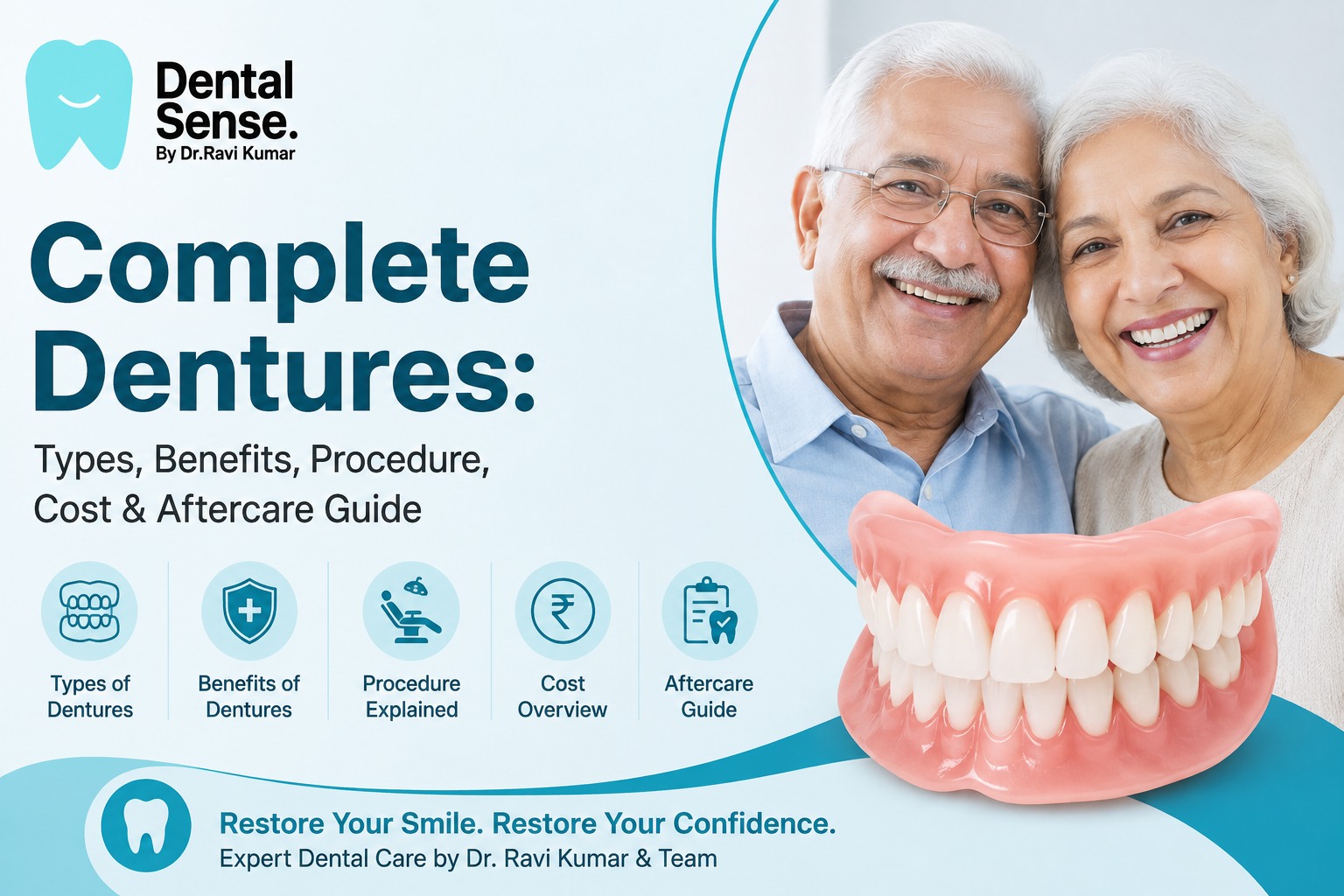
Losing all or most of your natural teeth can affect much more than your smile. It can make eating difficult, change the way you speak, and sometimes make you feel less confident in social situations. For many people with extensive tooth loss, complete dentures can offer a practical way to replace missing teeth and bring back better oral function.
Complete dentures are removable dental appliances that replace all the teeth in the upper or lower dental arch. They are designed to fit the shape of your mouth and provide artificial teeth that look natural and support everyday activities such as eating and speaking.
If you are considering dentures, it is normal to have questions. You may want to know which type is suitable for you, how the treatment works, how much it may cost, and how you should care for your dentures.
This guide explains everything you should know about complete dentures before making a decision.
What Are Complete Dentures?
Complete dentures are removable dental appliances used to replace all the teeth in one dental arch. They usually consist of artificial teeth attached to a denture base that is designed to rest on the gums.
A dentist first examines your mouth and assesses your gums, jaw structure and overall oral condition. The denture is then planned and made according to your individual measurements.
Complete dentures can help people who have lost all their natural teeth restore basic chewing function, improve speech and support the appearance of the face.
They are different from partial dentures, which replace only some missing teeth while some natural teeth remain.
How Do Complete Dentures Work?
Complete dentures rest on the tissues of the mouth and are designed to stay in position during normal activities. Proper fitting is important because a well-fitting denture can provide better comfort and stability.
The dentist checks the shape, size and position of the artificial teeth before the final denture is provided.
Who May Need Complete Dentures?
Complete dentures may be considered when a person has lost all or most teeth in a dental arch.
Common reasons for extensive tooth loss include:
- Severe tooth decay
- Advanced gum disease
- Dental injuries
- Long-term oral health problems
- Multiple damaged or non-restorable teeth
- Complete tooth loss due to different dental conditions
A dental examination is important before choosing dentures because every patient’s oral condition is different.
What Are the Different Types of Complete Dentures?
Not every denture is made or fitted in the same way. The right option depends on your dental condition, treatment requirements and personal preferences.
1. Conventional Complete Dentures
Conventional dentures are made after the gums have healed following tooth removal. Once the tissues have settled, the dentist takes impressions and plans the denture.
This type of denture is commonly considered when a patient has already lost all teeth or needs teeth removed before receiving the final denture.
2. Immediate Complete Dentures
Immediate dentures are prepared before tooth extraction and can be placed soon after the teeth are removed.
One benefit is that the patient does not have to remain without teeth during the healing period. However, the shape of the gums can change as they heal, so adjustments or a replacement denture may be needed later.
3. Implant-Supported Dentures
Implant-supported dentures use dental implants to provide additional support for the denture.
Unlike traditional dentures that mainly rest on the gums, implant-supported options receive support from implants placed in the jawbone.
They may offer greater stability for suitable patients. However, implant treatment requires a proper evaluation of the gums, jawbone and overall dental health.
4. Overdentures
Overdentures are designed to receive support from remaining natural teeth or dental implants, depending on the treatment plan.
They are not suitable for everyone. The dentist needs to assess the condition of the available teeth and supporting structures before recommending this option.
What Are the Benefits of Complete Dentures?
Complete dentures can provide several benefits for people with extensive tooth loss.
Replace Missing Teeth
The most obvious benefit is tooth replacement. Dentures provide artificial teeth that can restore the appearance of a complete smile.
Improve Chewing
Missing teeth can make it difficult to chew certain foods. Dentures can help restore basic chewing function, although it may take some time to get used to eating with them.
Support Facial Appearance
Natural teeth provide support to the lips and cheeks. When many teeth are missing, changes in facial appearance can occur. Properly designed dentures can provide some facial support.
Help With Speech
Missing teeth can affect pronunciation. Dentures may help improve speech by providing a replacement structure for the missing teeth.
New denture users may need some practice before speaking feels completely natural.
Improve Confidence
A complete smile can make many people feel more comfortable when talking, eating or meeting others.
Are Complete Dentures Right for You?
Complete dentures can be a useful option, but they are not automatically the right choice for every person.
The dentist may consider several factors before recommending them, including:
- Number of missing teeth
- Gum health
- Jawbone condition
- Oral hygiene
- Existing dental problems
- Lifestyle
- Budget
- Desired level of stability
- Overall treatment goals
If you have several missing teeth or are finding it difficult to eat or speak comfortably, a dental consultation can help you understand your options.
How Is Complete Denture Treatment Done?
Getting complete dentures usually involves several steps. The exact process can vary depending on the patient’s condition and the type of denture being planned.
Step 1: Dental Examination
The dentist first examines your mouth, gums and jaw. Any existing dental problems may need to be treated before the denture is made.
Step 2: Treatment Planning
The dentist discusses suitable tooth replacement options with you. This is also the stage where you can ask questions about denture types, expected results, maintenance and cost.
Step 3: Taking Mouth Impressions
The dentist takes impressions of your mouth. These impressions help the dental laboratory create a denture that matches the shape of your oral tissues.
Step 4: Recording the Bite
The dentist evaluates how your upper and lower jaws come together. This helps determine the appropriate position and height of the artificial teeth.
Step 5: Selecting the Artificial Teeth
The size, shape and shade of the artificial teeth are selected according to the treatment plan and patient’s requirements.
Step 6: Denture Fabrication
The denture is prepared using the measurements and impressions taken during the earlier appointments.
Step 7: Fitting the Denture
Once the denture is ready, the dentist checks its fit, bite and comfort. Minor adjustments may be required.
Step 8: Follow-Up
A follow-up appointment allows the dentist to identify any areas causing discomfort and make suitable adjustments.
How Much Do Complete Dentures Cost in Patna?
The cost of complete dentures in Patna can vary from one patient to another. There is no single price that applies to everyone because the treatment depends on the patient’s dental condition and the type of denture selected.
Some factors that can affect the cost include:
- Type of denture
- Material used
- Denture design
- Number of dental visits
- Need for tooth extraction
- Gum condition
- Additional dental treatment
- Laboratory charges
- Need for adjustments
- Implant treatment, if required
For example, conventional dentures and implant-supported dentures involve different treatment processes, so their costs can differ significantly.
If you are looking for complete denture treatment in Patna, the best way to understand the expected cost is to have a dental examination first. After assessing your mouth and discussing your requirements, the dentist can explain the available options and provide a treatment estimate.
How Long Do Complete Dentures Last?
Complete dentures do not last forever. Their lifespan depends on several factors, including the quality of the denture, how often you use it, how well you maintain it and how your mouth changes over time.
The gums and jawbone can gradually change after tooth loss. Because of these changes, a denture that fitted well several years ago may eventually become loose or uncomfortable.
You may need a denture adjustment, relining or replacement when the fit changes.
Signs That Your Dentures May Need Replacement
Look out for:
- Frequent movement while eating
- Cracks or visible damage
- Difficulty chewing
- Persistent discomfort
- Changes in speech
- Loose fitting
- Worn artificial teeth
Regular dental check-ups can help identify these problems early.
How to Care for Complete Dentures
Good denture care can help maintain cleanliness, comfort and appearance.
Clean Your Dentures Every Day
Remove and clean your dentures regularly. Follow your dentist’s instructions regarding the appropriate cleaning method and products.
Rinse After Meals
Rinsing your dentures after eating can help remove food particles.
Clean Your Mouth
Even when you have no natural teeth, oral hygiene remains important. Clean your gums, tongue and other areas of your mouth as advised by your dentist.
Handle Dentures Carefully
Dentures can break if they fall onto a hard surface. Hold them carefully when removing or cleaning them.
Store Them Properly
When your dentures are not being worn, follow your dentist’s advice about storage. Some dentures need to remain moist to help prevent changes in their shape.
Visit Your Dentist Regularly
A regular dental examination allows the dentist to check your mouth and the condition and fit of your dentures.
What Can You Eat With Complete Dentures?
Eating with new dentures can take some practice.
Start with softer foods and take small bites. Chew slowly and try using both sides of your mouth. As you become more comfortable, you can gradually introduce a wider variety of foods.
Soft foods that may be easier to manage initially include:
- Cooked vegetables
- Eggs
- Soft fruits
- Porridge
- Soft rice
- Well-cooked foods
Very hard, sticky or tough foods may be difficult to manage, especially during the adjustment period.
If your dentures move repeatedly while eating, speak with your dentist. The denture may need an adjustment.
Complete Dentures vs Partial Dentures
The main difference is the number of teeth being replaced.
| Feature | Complete Dentures | Partial Dentures |
| Teeth replaced | All teeth in a dental arch | Some missing teeth |
| Natural teeth | Usually no natural teeth remain in the treated arch | Some natural teeth remain |
| Removable | Yes | Usually yes |
| Main purpose | Replace complete tooth loss | Replace selected missing teeth |
Your dentist can recommend the appropriate option after examining your teeth, gums and jaw.
Complete Dentures vs Implant-Supported Dentures
Both options can replace missing teeth, but their support systems are different.
Traditional complete dentures rest mainly on the oral tissues. Implant-supported dentures receive additional support from dental implants.
Implant-supported dentures may provide improved stability for suitable patients, but they involve implant surgery and additional treatment.
The better option depends on factors such as jawbone condition, oral health, treatment expectations and budget.
Common Problems With New Complete Dentures
It is normal for some people to need time to adjust to new dentures.
Why Do New Dentures Feel Uncomfortable?
Your mouth needs time to get used to the new appliance. If discomfort continues or becomes severe, contact your dentist.
Why Do Dentures Move While Eating?
Movement can happen when the denture does not fit properly or when the mouth is still adjusting. A dentist can check the fit and make adjustments if required.
Can New Dentures Affect Speech?
Some people notice changes in speech during the first few days or weeks. Regular practice can help, but persistent problems should be discussed with the dentist.
What If Dentures Cause Sore Spots?
A sore spot may occur when a particular area of the denture puts pressure on the gum. Do not try to adjust the denture yourself. Your dentist can identify the problem and make the required adjustment.
When Should You Visit a Dentist About Your Dentures?
You should contact your dentist if you experience:
- Persistent gum soreness
- Dentures that repeatedly slip
- Difficulty chewing
- Broken or cracked dentures
- Sudden changes in fit
- Pain while wearing dentures
- Ongoing speech problems
Do not ignore persistent discomfort. A small adjustment can sometimes make a significant difference in comfort.
Key Takeaways About Complete Dentures
- Complete dentures replace all teeth in a dental arch.
- They can help restore basic chewing and speech functions.
- Conventional, immediate and implant-supported options are available.
- The right denture depends on your oral condition and treatment goals.
- New dentures may require an adjustment period.
- Proper cleaning and storage are important for denture care.
- Dentures may need adjustment, relining or replacement over time.
- The cost of complete dentures in Patna depends on the type of treatment and individual dental needs.
- A dental consultation is the best way to determine which option is suitable for you.
Frequently Asked Questions About Complete Dentures
What are complete dentures?
Complete dentures are removable dental appliances that replace all the teeth in one dental arch. They contain artificial teeth attached to a denture base and are designed to restore basic chewing function, speech and the appearance of the smile.
How much do complete dentures cost in Patna?
The cost of complete dentures in Patna varies according to the denture type, materials, laboratory work, dental condition and additional procedures. A dentist can provide a more accurate estimate after examining your mouth and discussing the suitable treatment option.
Are complete dentures comfortable?
Complete dentures can become comfortable after the mouth adjusts to them. However, poor fit can cause discomfort, movement or sore spots. If these problems continue, your dentist can check the denture and make suitable adjustments.
Can I eat normally with complete dentures?
Most people can eat a wide range of foods after getting used to their dentures. It is better to begin with softer foods, take small bites and chew slowly. Very hard or sticky foods may be difficult, especially during the initial adjustment period.
How long do complete dentures last?
The lifespan of complete dentures varies from person to person. Daily use, cleaning, denture material, fit and changes in the gums and jaw can all affect how long they remain suitable. Regular dental check-ups can help determine when adjustment or replacement is needed.
Can I sleep while wearing complete dentures?
Your dentist can advise you about whether and when to remove your dentures. Many patients are advised to remove removable dentures for a period during sleep so the oral tissues can rest and remain clean.
How should I clean complete dentures?
Clean your dentures regularly according to your dentist’s instructions. Rinse them after meals, clean them carefully and maintain good oral hygiene for your gums and tongue. Avoid using products that can damage the denture material unless recommended by your dentist.
What is the difference between complete and partial dentures?
Complete dentures replace all teeth in a dental arch, while partial dentures replace some missing teeth when natural teeth are still present. The appropriate option depends on how many teeth are missing and the condition of the remaining teeth.
Are complete dentures suitable for older adults?
Complete dentures may be suitable for older adults who have extensive tooth loss. Age alone does not determine whether dentures are appropriate. The dentist considers oral health, gum condition, jaw structure, ability to maintain the dentures and the patient’s treatment needs.
Where can I get complete denture treatment in Patna?
If you are considering dentures for missing teeth, you can consult Dental Sense in Patna for an assessment of your oral condition and discuss suitable tooth replacement options with a dental professional.
Get the Right Denture Solution for Your Smile
Living with missing teeth can make everyday activities harder than they need to be. The right denture can help you eat, speak and smile with greater confidence.
If you are considering Complete Dentures in Patna, start with a professional dental consultation. The dentist can examine your oral health, understand your concerns and explain which denture option may suit your needs.
Dental Sense provides dental care in Patna and can help you understand your available tooth replacement options.