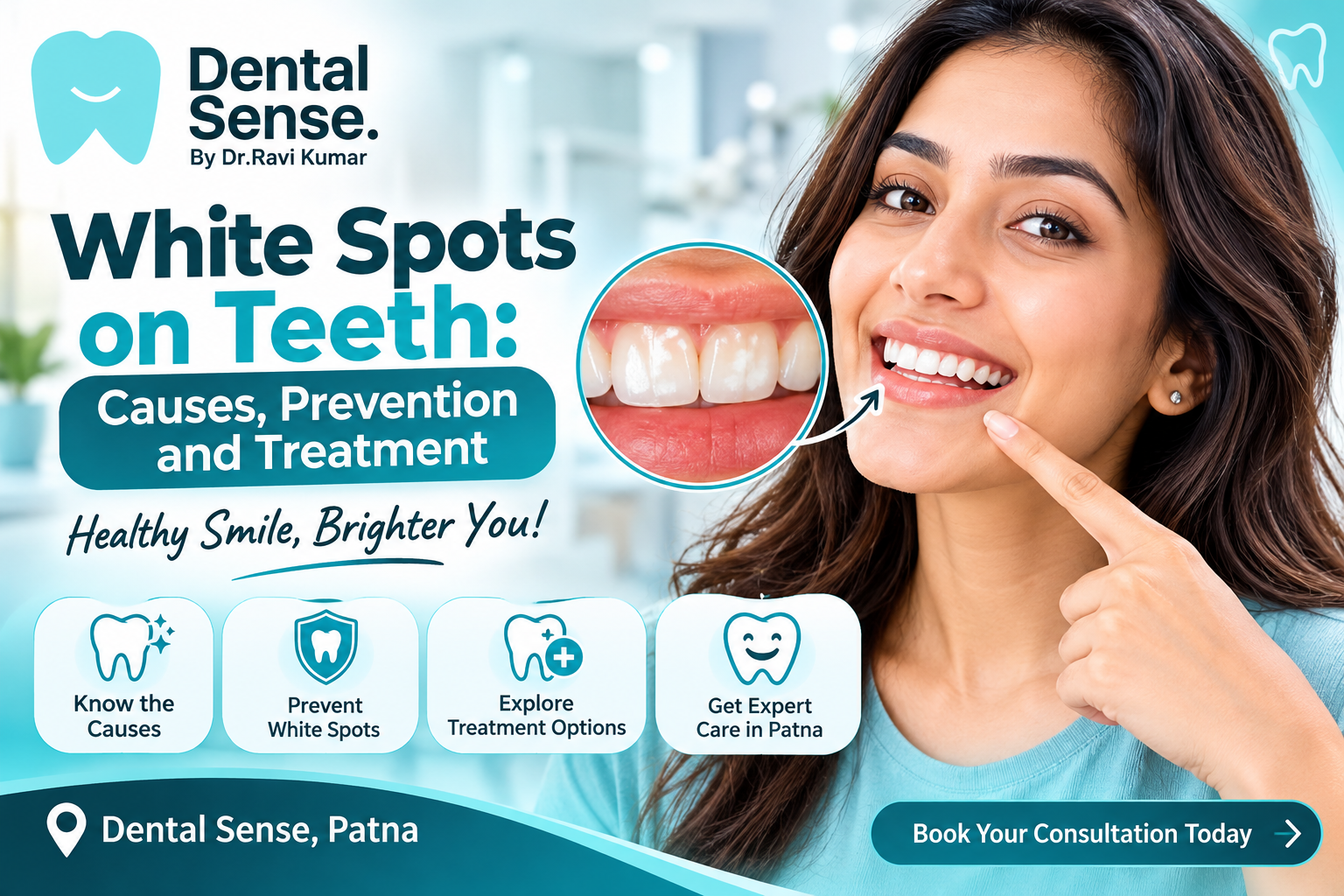
Have you ever looked at your teeth in the mirror and noticed small white patches that were not there before? These marks can appear on the front teeth, near the gums, or on different parts of the tooth surface. Some people notice them after removing braces, while others see them during their regular brushing routine.
White spots on teeth are areas where the enamel looks whiter or more opaque than the surrounding tooth surface. They can develop because of mineral loss, changes during tooth development, dental fluorosis, or other enamel-related conditions.
Many people ignore these marks because they do not always cause pain. However, some white spots can be an early sign of tooth decay. Others may be harmless but affect the appearance of your smile.
The good news is that several preventive and cosmetic treatment options are available. The right approach depends on what caused the spots and how much the enamel is affected.
In this guide, we will explain the common causes of white spots on teeth, how to prevent them, and which treatments a dentist may recommend. We will also discuss when you should visit a dentist in Patna for a proper dental examination.
What Are White Spots on Teeth?
White spots on teeth are visible changes in the appearance of tooth enamel. They may look like small white marks, cloudy patches, chalky areas, or uneven lines on the teeth.
Tooth enamel is the hard outer layer that protects your teeth from everyday wear, bacteria, and acids. When the mineral content or development of this layer changes, certain areas may look different from the rest of the tooth.
White marks can appear on one tooth or several teeth. Their size, shape, and appearance depend on the underlying cause.
Some common types include:
-
Chalky white spots: Often associated with early enamel demineralisation.
-
White lines: May occur due to dental fluorosis or developmental enamel changes.
-
Cloudy patches: Can appear because of changes in enamel formation.
-
White spots near the gums: May be associated with plaque-related mineral loss.
It is important to understand that white spots do not always mean permanent enamel damage. A dentist can examine the teeth and identify the possible reason behind these changes.
What Are the Main Causes of White Spots on Teeth?
Several dental conditions and everyday habits can contribute to white marks on teeth. Here are six common causes you should understand.
1. Enamel Demineralisation
Enamel demineralisation happens when the teeth lose important minerals, mainly calcium and phosphate.
Bacteria in dental plaque produce acids when they break down sugars from food and drinks. Frequent exposure to these acids can weaken the enamel and create white, chalky areas.
These spots may develop around the gumline or near orthodontic brackets. They can be an early sign of tooth decay.
Early identification is important because appropriate fluoride care and improved oral hygiene may help manage initial mineral loss.
2. Dental Fluorosis
Dental fluorosis develops when a child receives excessive fluoride exposure while permanent teeth are still forming.
It can change the appearance of tooth enamel. Mild fluorosis may create faint white lines or cloudy patches, while more noticeable cases can affect the tooth surface.
Dental fluorosis generally develops during childhood. It is not caused by normal fluoride toothpaste use after permanent teeth have fully developed.
Parents should follow age-appropriate fluoride recommendations and supervise young children while brushing.
3. Enamel Hypoplasia
Enamel hypoplasia is a developmental condition in which the enamel does not form completely.
It may cause:
-
White or yellowish patches.
-
Small pits on the teeth.
-
Thin or uneven enamel.
-
Grooves on the tooth surface.
This condition develops while teeth are forming. Certain childhood illnesses, nutritional problems, and other developmental factors may contribute to it.
People with enamel hypoplasia may have a higher risk of tooth decay because the protective enamel can be thinner or less developed.
4. Poor Oral Hygiene
Poor oral hygiene allows plaque to collect on the teeth. Over time, bacteria in plaque produce acids that can weaken the enamel.
This is particularly important for people who wear braces. Food particles and plaque can collect around orthodontic brackets, making those areas difficult to clean.
If plaque remains around these areas, white spot lesions may develop.
Brushing twice daily, cleaning between teeth, and following your dentist’s instructions can help reduce this risk.
5. Early Tooth Decay
White spots can sometimes indicate the initial stage of tooth decay.
At this stage, the enamel loses minerals but may not have developed a visible hole. The affected area often looks dull, chalky, or different from the surrounding enamel.
A dentist can examine the affected tooth and determine whether preventive treatment may help stop the condition from progressing.
6. Dietary and Oral Hygiene Habits
Frequent consumption of sugary snacks and acidic drinks can increase the risk of enamel demineralisation.
Soft drinks, sweetened juices, and frequent sugary snacks expose teeth to acids that can weaken enamel.
Maintaining a balanced diet, drinking water regularly, and limiting frequent sugar intake can support better oral health.
For more guidance, read the CDC’s oral health information.
How Can White Spots on Teeth Be Treated?
The treatment depends on the cause, depth, and condition of the affected enamel. A dentist may recommend preventive care or a cosmetic procedure after examining your teeth. Research published in the British Dental Journal also highlights the importance of identifying the cause and depth of white spot lesions before selecting a treatment.
Nature+1
1. Fluoride Treatment and Remineralisation
When white spots result from early enamel mineral loss, fluoride treatment and better oral hygiene may help strengthen the affected area.
Saliva and fluoride can support the natural remineralisation process. This may help manage early decay before a cavity develops, but it cannot restore enamel that has already been physically lost.
NIDCR
2. Resin Infiltration
Resin infiltration is a minimally invasive treatment for selected white spot lesions. The dentist applies a special resin that enters tiny spaces within the affected enamel. This can reduce the difference in appearance between the white patch and the surrounding tooth.
It may be useful for certain white spots that develop after braces. However, the result depends on the depth and type of lesion, so it is not suitable for every case.
Nature+1
3. Dental Microabrasion
Dental microabrasion removes a very thin surface layer of enamel to improve certain superficial marks.
A dentist may consider this option when the white spots are limited to the outer enamel. Because the procedure removes some enamel, the dentist must assess whether the expected benefit justifies the treatment.
4. Dental Bonding
Dental bonding uses a tooth-coloured composite material to cover selected enamel defects. The dentist shapes the material to blend with the surrounding tooth.
Bonding may help when white marks are prominent or when other treatments are not suitable. The final result depends on the location and size of the affected area.
5. Dental Veneers
Veneers are thin coverings placed on the front surface of selected teeth. A dentist may consider them when white spots cause significant cosmetic concerns and less invasive treatments are unsuitable.
Veneers are not necessary for every white spot. Some veneer procedures require removing natural tooth structure, so discuss the benefits, limitations, and alternatives with your dentist first.
Remember: Do not try to remove white spots using lemon juice, harsh whitening products, or abrasive powders. These methods can irritate the gums or damage tooth surfaces.
For more information about the care available at Dental Sense, visit the Dental Services page.
Can White Spots on Teeth Go Away Naturally?
Some white spots caused by early enamel demineralisation may become less noticeable with appropriate dental care. However, spots caused by dental fluorosis or enamel hypoplasia may remain visible without professional cosmetic treatment.
The outcome depends on the underlying cause and the condition of the enamel. Good oral hygiene can help protect your teeth, but it cannot remove every type of white mark.
The National Institute of Dental and Craniofacial Research explains that early tooth decay can sometimes be stopped or reversed before a cavity forms.
NIDCR
If you notice a new white spot, avoid guessing its cause or applying home remedies. A dental examination can help you understand whether the spot needs preventive care or another treatment.
How Can You Prevent White Spots on Teeth?
You cannot prevent every developmental enamel condition, but simple daily habits can lower the risk of plaque-related white spots.
Brush Twice a Day
Brush your teeth twice daily with fluoride toothpaste. Use a soft-bristled toothbrush and clean all tooth surfaces gently.
Clean Between Your Teeth
Use dental floss or a suitable interdental cleaner to remove plaque from areas your toothbrush cannot reach easily. If you wear braces, follow your dentist’s cleaning instructions carefully.
Limit Frequent Sugary Snacks
Bacteria in plaque use sugars to produce acids that weaken enamel. Limit frequent sugary snacks and drinks, and choose water more often.
Use Fluoride Correctly
Fluoride helps protect enamel against tooth decay. Use fluoride toothpaste as directed, and follow age-appropriate recommendations for children.
Schedule Regular Dental Check-Ups
Regular examinations can help identify early tooth decay and other enamel changes before they become more serious.
You can read more about preventive care in our guide to regular dental check-ups in Patna.
When Should You Visit a Dentist for White Spots?
You should consider a dental appointment if:
-
White marks appear suddenly or change in appearance.
-
Chalky patches develop near the gumline.
-
You notice tooth sensitivity or pain.
-
The enamel looks rough or has small pits.
-
White spots appear after braces.
-
You suspect that a white patch may be an early cavity.
White spots do not always indicate a serious problem. However, an examination can help distinguish harmless developmental changes from early tooth decay.
If you need professional advice, you can contact Dental Sense in Patna to enquire about an appointment.
White Spots on Teeth Treatment at Dental Sense in Patna
Not every white spot requires the same treatment. Some cases need preventive care, while others may benefit from a cosmetic procedure. The first step is to identify the cause.
At Dental Sense in Patna, you can discuss changes in your teeth and learn about suitable dental care options. A dental consultation may help you understand:
-
Whether the marks relate to enamel demineralisation or another condition.
-
Whether preventive treatment may help protect the affected teeth.
-
Which professional treatments may improve the appearance of white spots.
-
How to maintain good oral hygiene and reduce the risk of further enamel problems.
Dental Sense provides a range of dental services, including preventive and cosmetic care. You can explore the available dental services to learn more.
If you are concerned about white spots on your teeth, arrange a consultation to discuss your symptoms and treatment options. The appropriate approach will depend on your individual dental condition.
Key Takeaways About White Spots on Teeth
-
White spots can develop due to mineral loss, dental fluorosis, enamel hypoplasia, or early tooth decay.
-
White marks do not always mean that a cavity is present.
-
Fluoride toothpaste, regular brushing, and good oral hygiene can help protect enamel.
-
Treatment options include remineralisation, resin infiltration, microabrasion, bonding, and veneers for selected cases.
-
Home remedies involving acids or abrasive substances may harm your teeth.
-
A dentist can identify the likely cause and recommend suitable care.
Frequently Asked Questions About White Spots on Teeth
1. What causes white spots on teeth?
White spots can develop because of enamel demineralisation, dental fluorosis, enamel hypoplasia, plaque accumulation, or early tooth decay. A dentist can examine your teeth to determine the likely cause.
2. Are white spots on teeth a sign of cavities?
Sometimes. White, chalky patches may indicate early enamel mineral loss, which can be an initial stage of tooth decay. However, developmental enamel conditions can also cause white marks.
3. How can I remove white spots on teeth?
Treatment depends on the cause. A dentist may recommend fluoride treatment, resin infiltration, microabrasion, bonding, or another suitable option. Not every white spot needs cosmetic treatment.
4. Can fluoride toothpaste help white spots?
Fluoride toothpaste helps protect enamel and may support the management of early mineral loss. It will not remove every type of white spot, particularly marks caused by developmental enamel conditions.
5. Why do white spots appear after braces?
Plaque can collect around orthodontic brackets and increase the risk of enamel demineralisation. This can create white spot lesions. Careful cleaning during orthodontic treatment can help reduce the risk.
6. Are white spots on teeth permanent?
Some white spots caused by early demineralisation may improve with appropriate care. Marks caused by fluorosis or enamel hypoplasia may remain visible and sometimes require professional cosmetic treatment.
7. Can I remove white spots on teeth at home?
Good oral hygiene may help manage early enamel mineral loss, but it cannot remove every type of white spot. Avoid acidic or abrasive home remedies, and seek dental advice before trying whitening products.
8. Which dentist should I visit for white spots on teeth in Patna?
Look for a qualified dentist who can examine your teeth, explain the possible cause, and discuss suitable treatment options. You can contact Dental Sense to enquire about a dental consultation in Patna.