Have you noticed black lines on your teeth while brushing or looking in the mirror? These dark marks can affect the appearance of your smile and may leave you wondering whether something is wrong with your teeth. Sometimes, black lines develop because of food stains or tartar buildup. In other cases, they may indicate tooth decay or another dental problem.
The good news is that many causes of black lines on teeth can be treated with the right dental care. However, the correct treatment depends on what is causing the marks. Brushing alone may not remove every stain, especially when hardened tartar or tooth damage is involved.
In this guide, we will explain the common causes of black lines on teeth, the treatments that may help, and simple ways to prevent new stains. If you live in Patna and have noticed unusual marks on your teeth, a dental check-up can help you understand the cause and choose the right treatment.
What Are Black Lines on Teeth?
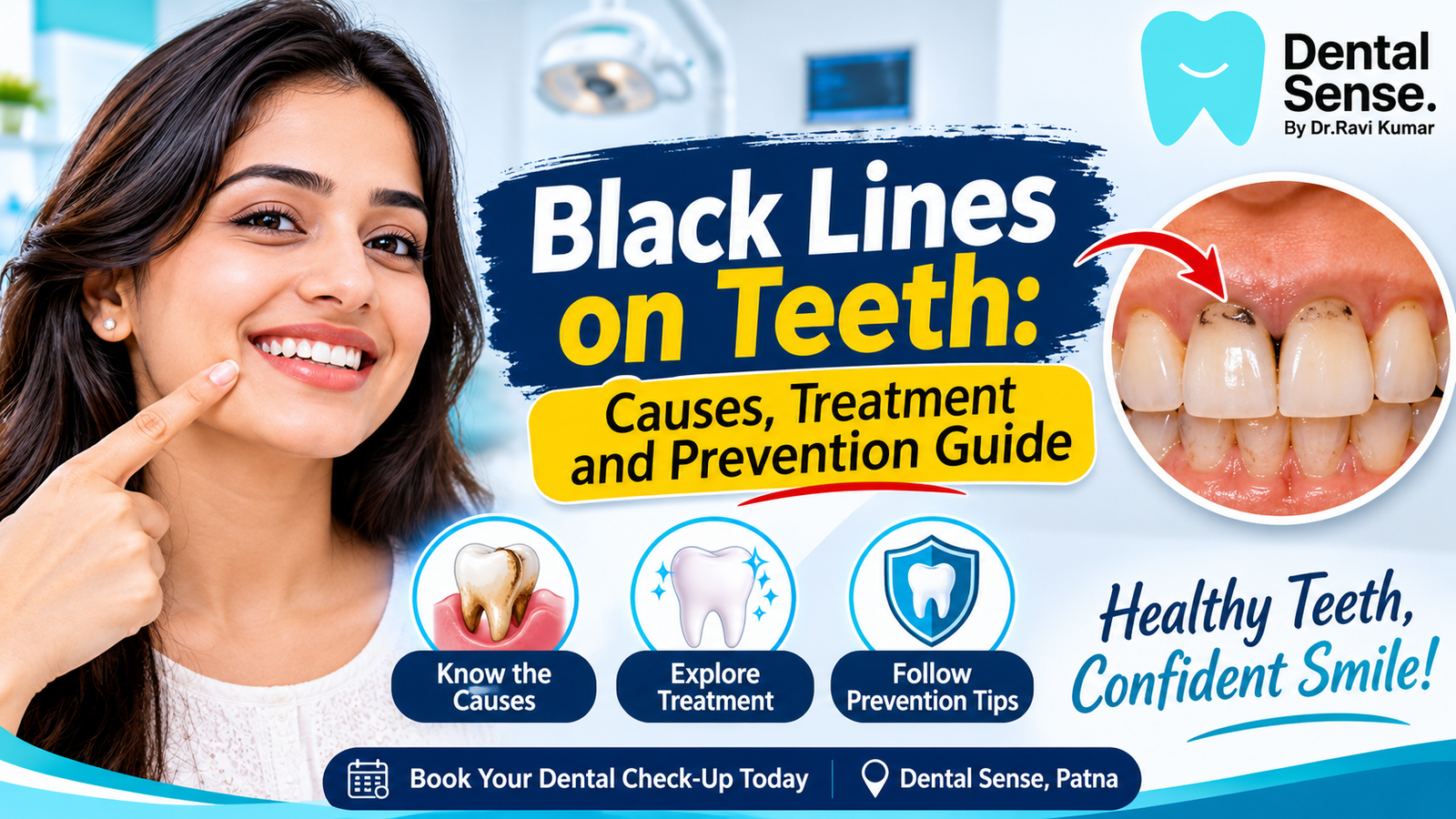
Black lines on teeth are dark marks that appear on the surface of a tooth, between teeth, or near the gumline. They may look like thin lines, small spots, or dark patches. Their appearance depends on the cause and the location of the affected tooth.
Some black lines are surface stains caused by food, drinks, or tobacco exposure. Others develop when plaque hardens into tartar. Dark marks can also appear when tooth decay damages the enamel or the underlying tooth structure.
It is important to understand that black lines on teeth do not always mean you have a cavity. A dentist can examine the affected area and determine whether the marks require professional cleaning, restorative treatment, or further investigation.
What Causes Black Lines on Teeth?
Several factors can cause black stains on teeth. Identifying the cause helps a dentist recommend suitable treatment.
1. Plaque and Tartar Buildup
Plaque is a sticky film of bacteria that forms on teeth throughout the day. Regular brushing and cleaning between teeth help remove it. When plaque remains on the teeth, it can harden into tartar, also called dental calculus.
Tartar often collects near the gumline and between teeth. It may appear yellow or brown, and some deposits can look dark or black. Once tartar hardens, a toothbrush cannot remove it effectively.
Professional dental cleaning can remove tartar and help maintain healthy gums. If you notice dark deposits near your gums, consider visiting a dentist rather than trying to scrape them off yourself.
Learn more about advanced gum treatment at Dental Sense.
2. Food and Drink Stains
Certain foods and drinks contain pigments that can gradually stain the teeth. Tea and coffee are common examples. Frequent exposure to strongly coloured foods and drinks may contribute to surface discoloration.
Tobacco products can also cause stubborn brown or dark stains. These stains may collect in small grooves or around areas where plaque is present.
Good oral hygiene can help reduce surface staining, but brushing does not always remove marks that have built up over time. A dentist can assess whether professional cleaning or another treatment would be suitable.
3. Tooth Decay and Dental Cavities
Tooth decay develops when acids produced by bacteria damage the tooth surface. Over time, the affected area may develop a brown or black appearance.
A dark line or spot may appear in the grooves of a molar, between teeth, or near an existing filling. However, colour alone cannot confirm whether a cavity is present.
Other symptoms may include sensitivity to hot or cold foods, discomfort while chewing, or visible damage to the tooth. Some cavities do not cause pain in their early stages, so a dental examination is important when you notice a new or changing dark mark.
If a dentist confirms tooth decay, treatment may involve a dental filling or another procedure based on the depth of the damage. Read more about dental fillings at Dental Sense.
4. Dark Stains Caused by Oral Bacteria
Certain types of oral bacteria can contribute to dark deposits on teeth. These deposits may appear as small black spots or lines, sometimes close to the gumline.
Such stains are not necessarily a sign of poor brushing. They may develop even in people who maintain a regular oral hygiene routine.
A dentist can examine the pattern of the stains and check for other dental problems. Professional cleaning may help remove these deposits, although some stains can return over time. The right approach depends on the cause and the condition of your teeth and gums.
5. Enamel Damage
Tooth enamel is the hard outer layer that protects each tooth. Acid exposure, wear, and certain dental conditions can affect the enamel and change the appearance of a tooth.
When the tooth surface becomes damaged, stains may become more noticeable. A dark area may also indicate an underlying problem that needs professional attention.
Avoid using harsh powders, abrasive scrubs, or acidic home remedies to remove these marks. Such methods can damage the tooth surface or irritate your gums. A dentist can recommend a suitable approach after examining the affected tooth.
6. Old Fillings or Dental Restorations
Sometimes, a dark line appears around an old filling or another dental restoration. This may result from staining, changes in the surrounding tooth, or a problem with the restoration itself.
A dark edge does not automatically mean the filling has failed. However, if the area has changed recently, food frequently gets trapped there, or you experience pain, a dentist should examine it.
Treatment may involve cleaning, repairing the restoration, replacing a filling, or addressing tooth decay if present.
Are Black Lines on Teeth a Sign of Tooth Decay?
Not always. Black lines on teeth may result from surface stains, tartar deposits, or tooth decay. Their colour alone cannot identify the cause.
If a dark mark appears with pain, sensitivity, a visible hole, or discomfort while chewing, arrange a dental examination. Even without pain, a new or changing mark deserves attention because some cavities develop without obvious symptoms.
A dentist may examine the tooth and recommend an X-ray if needed. This helps identify problems that may not be visible during a routine visual examination.
Early diagnosis can help prevent a small dental problem from becoming more serious.
How to Remove Black Lines on Teeth
The best treatment for black lines on teeth depends on their cause. A dentist will examine the affected area before recommending a procedure.
1. Professional Dental Scaling and Polishing
Professional scaling removes hardened tartar from the teeth. Dentists use specialised instruments to clean areas that a toothbrush cannot reach effectively.
Polishing may also help remove certain external stains and smooth the tooth surface. This treatment is particularly useful when dark marks result from tartar or surface deposits.
However, scaling cannot repair a cavity or restore damaged enamel. Your dentist will explain whether cleaning alone is enough or whether another treatment is necessary.
2. Dental Fillings for Tooth Decay
If a dentist finds a cavity, a dental filling may be needed to restore the damaged area. The dentist removes the decayed portion of the tooth and fills the space with a suitable material.
Treating decay early can help preserve more of the natural tooth. If the damage reaches deeper layers, the dentist may recommend additional treatment.
You can explore the dental filling services offered by Dental Sense to learn more about cavity treatment.
3. Professional Teeth Whitening
Teeth whitening may improve certain types of surface discoloration. A dentist can assess whether whitening is suitable for your teeth and explain the likely results.
Whitening does not remove hardened tartar, treat cavities, or repair damaged enamel. It may also be unsuitable until existing dental problems have been addressed.
For this reason, do not choose a whitening treatment simply because you have noticed black marks. First, identify what is causing them.
4. Treatment for Damaged Teeth
If a dark mark is associated with a damaged tooth or an old restoration, the dentist may recommend a filling, crown, or another suitable treatment.
The choice depends on how much of the tooth remains healthy and whether the inner part of the tooth is affected. A root canal may be needed if the pulp inside the tooth becomes infected or irreversibly damaged.
Learn about root canal treatment at Dental Sense for more information about treating deeper tooth problems.
Can You Remove Black Stains on Teeth at Home?
You can take several steps at home to maintain clean teeth and reduce the risk of new stains. However, home care cannot remove every type of black mark.
Follow these simple habits:
- Brush twice daily: Use fluoride toothpaste and a soft-bristled toothbrush.
- Clean between your teeth: Use dental floss or an appropriate interdental brush.
- Drink water regularly: Water helps wash away food particles and supports a healthy mouth.
- Limit frequent exposure to staining drinks: Reduce repeated sipping of tea, coffee, and other strongly coloured drinks.
- Avoid harsh home remedies: Lemon juice, abrasive powders, and aggressive scrubbing can damage teeth or irritate gums.
Do not use sharp objects to scrape black lines from your teeth. You could injure your gums or damage the tooth surface.
If a mark remains despite regular brushing, arrange a dental examination. The dentist can determine whether it is a surface stain, tartar, or a sign of another problem.
How to Prevent Black Lines on Teeth
Good daily habits can help reduce plaque buildup, surface stains, and the risk of tooth decay.
Maintain a Regular Brushing Routine
Brush twice a day with fluoride toothpaste. Clean all tooth surfaces gently, including the areas near the gumline. Replace your toothbrush when its bristles become worn.
Clean Between Your Teeth
A toothbrush cannot reach every space between your teeth. Daily flossing or using an appropriate interdental brush helps remove food particles and plaque from these areas.
Reduce Frequent Staining Drinks
Tea and coffee may contribute to tooth staining. You do not necessarily need to stop drinking them, but reducing frequent exposure and drinking water afterwards can help limit residue.
Avoid Tobacco Products
Tobacco can stain teeth and harm oral health. Avoiding tobacco helps protect your teeth, gums, and overall health.
Schedule Regular Dental Check-Ups
Routine dental visits help identify tartar, cavities, and gum problems before they become more serious. Your dentist can also advise you on how often you need professional cleaning.
Read our guide on the importance of regular dental check-ups for more information.
When Should You Visit a Dentist for Black Lines on Teeth?
You should arrange a dental appointment if you notice new black lines, dark marks that are getting larger, or deposits that do not improve with normal brushing.
Seek dental advice if you experience:
- Tooth pain or sensitivity.
- A visible hole or damaged tooth surface.
- Dark marks around an old filling.
- Swollen or bleeding gums.
- Discomfort while chewing.
- A persistent dark mark near the gumline.
Severe dental pain, facial swelling, or swelling accompanied by fever needs prompt professional attention.
If you live in Patna, a dental examination can help you understand the cause of the black lines and choose the right treatment. Avoid delaying care simply because the affected tooth does not hurt.
Where Can You Get Dental Care for Black Lines on Teeth in Patna?
If you have noticed black stains on your teeth, the first step is to identify their cause. Professional cleaning may help with tartar and external stains, while cavities or damaged teeth may require restorative treatment.
Dental Sense provides dental care in Patna, including gum treatment, dental fillings, and root canal treatment. The clinic is located at A/192, P.C. Colony, Kankarbagh, Patna, Bihar 800020.
You can visit the Dental Sense contact page to find appointment and contact details.
A dental professional can assess your teeth, explain the available options, and recommend treatment according to your needs. Avoid choosing a treatment based only on the colour of the stain.
Frequently Asked Questions
1. Why do I have black lines on my teeth?
Black lines may develop because of surface stains, tartar buildup, certain oral bacteria, tooth decay, or changes around an old filling. A dentist can examine the affected tooth to identify the cause.
2. Can black lines on teeth be removed permanently?
Some black lines can be removed through professional cleaning, while others require treatment for decay or damaged teeth. Stains may return if the cause persists, so regular oral hygiene and dental check-ups are important.
3. Are black stains on teeth harmful?
Some black stains are only on the tooth surface, while others may indicate tartar or tooth decay. Their appearance alone cannot confirm whether they are harmful. A dental examination can help determine the cause.
4. Can brushing remove black marks on teeth?
Brushing can help remove plaque and reduce some surface staining. However, it cannot remove hardened tartar or treat a cavity. Persistent black marks should be checked by a dentist.
5. Does professional teeth cleaning remove black lines?
Professional scaling and polishing can remove many external stains and tartar deposits. If the black lines result from tooth decay or damage, additional treatment may be necessary.
6. Are black lines on teeth always cavities?
No. Black lines can result from stains, tartar, or other causes. A dentist may examine the tooth and recommend an X-ray if needed to check for decay that is not visible on the surface.
7. How can I prevent black stains from returning?
Brush twice daily with fluoride toothpaste, clean between your teeth, avoid tobacco, reduce frequent exposure to staining drinks, and attend regular dental check-ups. Your dentist can suggest additional steps based on the cause of the stains.
8. When should I visit a dentist in Patna for black lines on teeth?
Arrange an appointment if the marks are new, persistent, or increasing in size. Seek prompt care if you also have pain, swelling, or significant sensitivity. Early assessment helps identify the problem and guide treatment.
Key Takeaways
Black lines on teeth can develop for several reasons, including surface stains, tartar buildup, and tooth decay. The right treatment depends on the cause. Professional cleaning can remove many external stains and hardened deposits, while cavities may need fillings or other dental procedures.
Brush twice daily, clean between your teeth, and avoid harsh home remedies. If you notice a persistent or changing dark mark, consult a dentist instead of guessing what it means.
For readers in Patna, Dental Sense offers a place to seek professional advice about tooth stains, gum health, and dental treatment. A timely check-up can help you protect your natural teeth and maintain a healthy smile.
Book a Dental Check-Up
Concerned about black lines or dark stains on your teeth? Contact Dental Sense in Patna to arrange a dental consultation and discuss suitable treatment options.
SEO Publishing Notes
- Suggested category: Dental Care / Oral Health
- Featured image alt text: Black lines on teeth showing possible tooth stains and tartar buildup
- Suggested image file name: black-lines-on-teeth-causes-treatment.webp
- Recommended schema: Article, BreadcrumbList, and appropriate Dentist or LocalBusiness schema.
- Medical review: Have a qualified dentist review the article before publication.
- Internal links: The article links to relevant Dental Sense pages for gum treatment, fillings, root canal treatment, dental check-ups, and contact details.
- External links: Consider adding relevant educational references from the American Dental Association, National Institute of Dental and Craniofacial Research, and NHS oral health guidance.