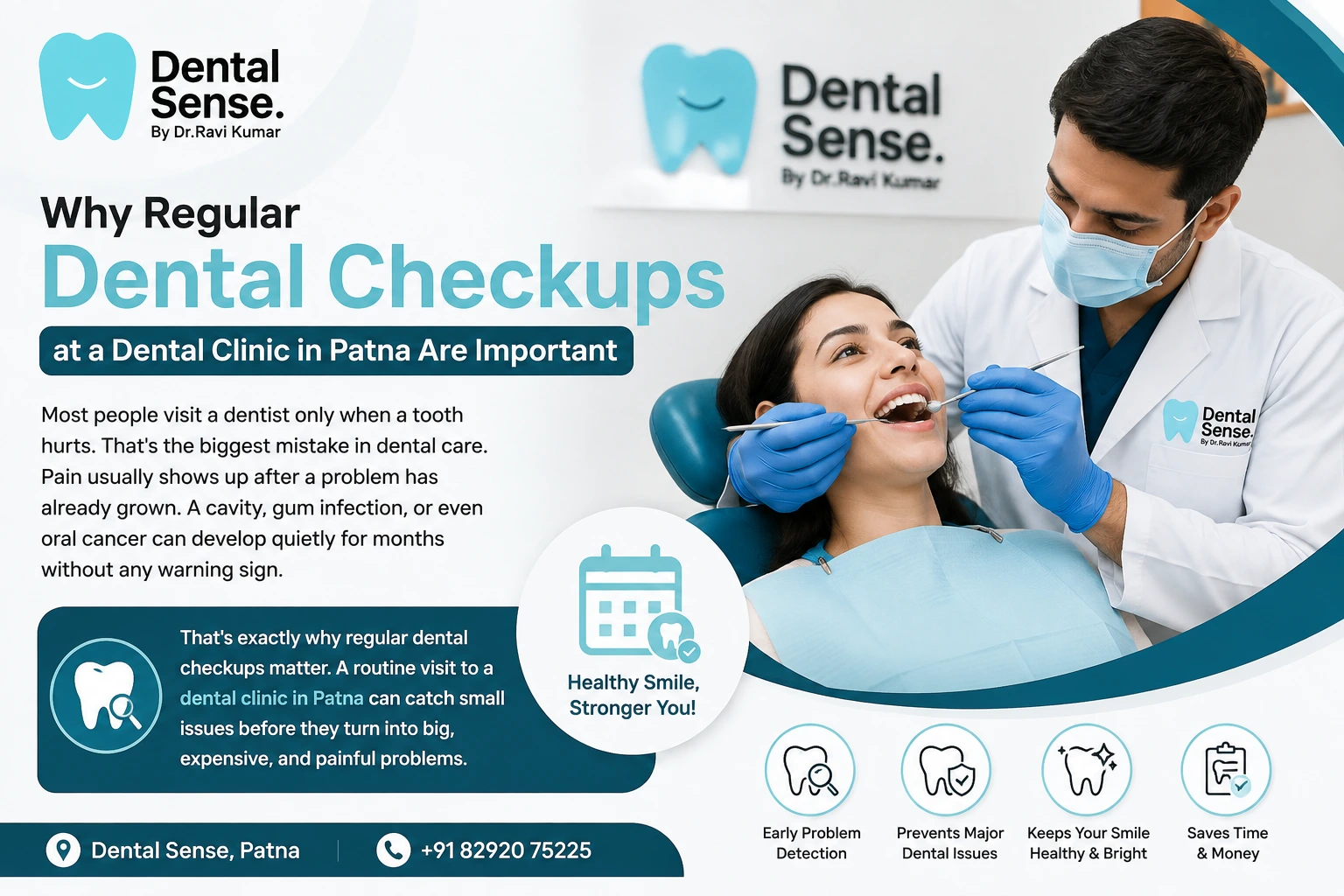
Most people visit a dentist only when a tooth hurts. That’s the biggest mistake in dental care. Pain usually shows up after a problem has already grown. A cavity, gum infection, or even oral cancer can develop quietly for months without any warning sign.
That’s exactly why regular dental checkups matter. A routine visit to a dental clinic in Patna can catch small issues before they turn into big, expensive, and painful problems. At Dental Sense, we see this pattern every week: patients who could have avoided a root canal with one simple checkup six months earlier.
This blog breaks down why checkups matter, how often you should go, what happens during a visit, and how to know when it’s time to book one.
What Is a Dental Checkup, and Why Does It Matter?
A dental checkup is a routine examination of your teeth, gums, and mouth. It usually takes 20 to 30 minutes. The dentist checks for cavities, plaque buildup, gum health, and any early signs of infection or decay. Many checkups also include a professional cleaning and, if needed, an X-ray.
The point of a checkup isn’t to fix a problem. It’s to find one before it becomes serious. Your teeth don’t send pain signals until damage is already underway. A checkup works like a health screening-it looks for trouble while it’s still small and easy to treat.
What Happens During a Routine Dental Visit
A typical visit at Dental Sense includes:
- A visual check of teeth, gums, and tongue
- Plaque and tartar removal
- A gum health check for early signs of gingivitis
- An oral cancer screening
- X-rays, if the dentist spots something that needs a closer look
None of this involves pain or discomfort. Most patients walk out within half an hour.
The Difference Between a Checkup and a Cleaning
People often confuse the two. A checkup is the full examination – the dentist looks for problems. A cleaning is one part of that visit, where plaque and tartar are removed from your teeth. Some dentists combine both in a single appointment. Others recommend cleaning more often than a full checkup, depending on your oral health.
How Often Should You Visit a Dental Clinic in Patna?
The standard recommendation is once every six months. This gives enough time to catch new problems early, without over-visiting.
General Guidelines for Adults
Most adults with reasonably good oral hygiene should stick to the six-month rule. If you have a history of cavities, gum disease, or wear braces, your dentist may suggest more frequent visits – sometimes every three to four months.
Special Cases: Kids, Seniors, and People With Dental Issues
Children should start dental visits as soon as their first tooth appears, and continue every six months after that. Early habits matter – kids who visit a dentist regularly tend to have fewer cavities as adults.
Seniors often need more frequent checkups because gum disease, tooth loss, and dry mouth become more common with age. People managing diabetes or other health conditions that affect oral health should also visit more often, as their dentist will guide.
Top Reasons Regular Dental Checkups Are Important
Early Detection of Cavities and Tooth Decay
Cavities don’t hurt in the early stages. By the time you feel pain, the decay has usually reached deeper layers of the tooth. A checkup catches this early, when treatment is simple — sometimes just a small filling instead of a root canal.
Preventing Gum Disease Before It Starts
Gum disease begins quietly, with mild redness or occasional bleeding while brushing. Left unchecked, it can progress to periodontal disease, which damages the bone supporting your teeth and can eventually lead to tooth loss. Regular checkups catch this at the reversible stage.
Catching Oral Cancer Early
This is one of the most overlooked benefits of a dental checkup. Dentists are trained to spot early signs of oral cancer – something most people would never notice on their own. Early detection dramatically improves treatment outcomes.
Saving Money on Bigger Dental Problems Later
A filling costs far less than a root canal. A root canal costs far less than an implant. Skipping checkups doesn’t save money – it just delays the bill and makes it bigger. Preventive care is almost always the cheaper path in the long run.
Keeping Bad Breath and Sensitivity Away
Persistent bad breath and tooth sensitivity are often signs of underlying issues like gum disease, cavities, or worn enamel. Regular cleanings and checkups address these root causes, not just the symptoms.
What Happens If You Skip Regular Dental Checkups?
Skipping checkups doesn’t mean nothing happens. It means problems develop without your knowledge, until they’re serious enough to cause pain, swelling, or visible damage.
Common Warning Signs People Ignore
- Mild gum bleeding while brushing
- Occasional tooth sensitivity to hot or cold
- A small dark spot on a tooth
- Slight bad breath that keeps coming back
Each of these looks minor on its own. Together, over time, they often point to a developing problem.
Long-Term Risks of Delayed Dental Care
Delayed care can lead to advanced tooth decay, gum disease, tooth loss, and in rare cases, more serious health complications. Oral health is also linked to overall health – untreated gum disease has been associated with heart disease and diabetes complications in several studies. Skipping the dentist isn’t just a dental risk. It can be a health risk.
Signs You Should Book a Dental Checkup Right Away
Toothache or Sensitivity
Any lasting pain or sensitivity to hot, cold, or sweet foods needs attention. Don’t wait for it to get worse.
Bleeding or Swollen Gums
Gums shouldn’t bleed during normal brushing or flossing. If yours do, it’s an early sign of gum inflammation.
Bad Breath That Won’t Go Away
If mouthwash and brushing don’t fix it, the cause is likely something a checkup needs to identify.
Visible Stains, Chips, or Cracks
Any visible change in your teeth, even a small chip, is worth getting checked before it worsens.
What to Expect at Dental Sense, Patna
Our Checkup Process, Step by Step
At Dental Sense, every checkup starts with a conversation about your concerns and dental history. The dentist then examines your teeth and gums, takes X-rays if needed, and performs a cleaning. You’ll get a clear explanation of any issues found, along with practical next steps – no unnecessary treatments, no confusing jargon.
Technology and Hygiene Standards We Follow
We use modern diagnostic equipment and follow strict sterilisation protocols for every patient. Our goal is simple: accurate diagnosis, comfortable treatment, and a clean, safe environment every single visit.
Tips to Maintain Oral Health Between Checkups
Daily Brushing and Flossing Habits
Brush twice a day for two minutes each time, using a soft-bristled brush. Floss once daily to clean between teeth, where a brush can’t reach. Replace your toothbrush every three months.
Foods That Help (and Hurt) Your Teeth
Crunchy fruits and vegetables, dairy products, and water help keep teeth strong and clean. Sugary snacks, sticky sweets, and frequent sipping of sugary drinks feed the bacteria that cause cavities. What you eat between meals matters just as much as what you eat during them.
Book Your Appointment Today
📍 Visit Dental Sense – Your trusted dental partner
📞 Call us: 099395 71740
🌐 Book online: https://dentalsense.co.in/
👉 Take your first step – Schedule a regular dental checkup now!
👉 A healthy smile begins with timely care – Book at Dental Sense.
👉 Your smile matters – Protect it with expert dental care.
Frequently Asked Questions
Q: How often should I visit a dental clinic in Patna?
A: Most dentists recommend a checkup every six months, even if you have no pain or visible problems.
Q: Is a dental checkup painful?
A: No. A routine checkup is non-invasive and usually takes 20 to 30 minutes.
Q: What if I have no dental pain – do I still need a checkup?
A: Yes. Many dental problems, like early cavities or gum disease, show no pain until they’re advanced.
Q: What does a dental checkup at Dental Sense include?
A: A visual exam, teeth cleaning, gum check, and X-rays if needed.
Q: How much does a dental checkup cost in Patna?
A: Costs vary depending on what’s included. Contact Dental Sense directly for current pricing.