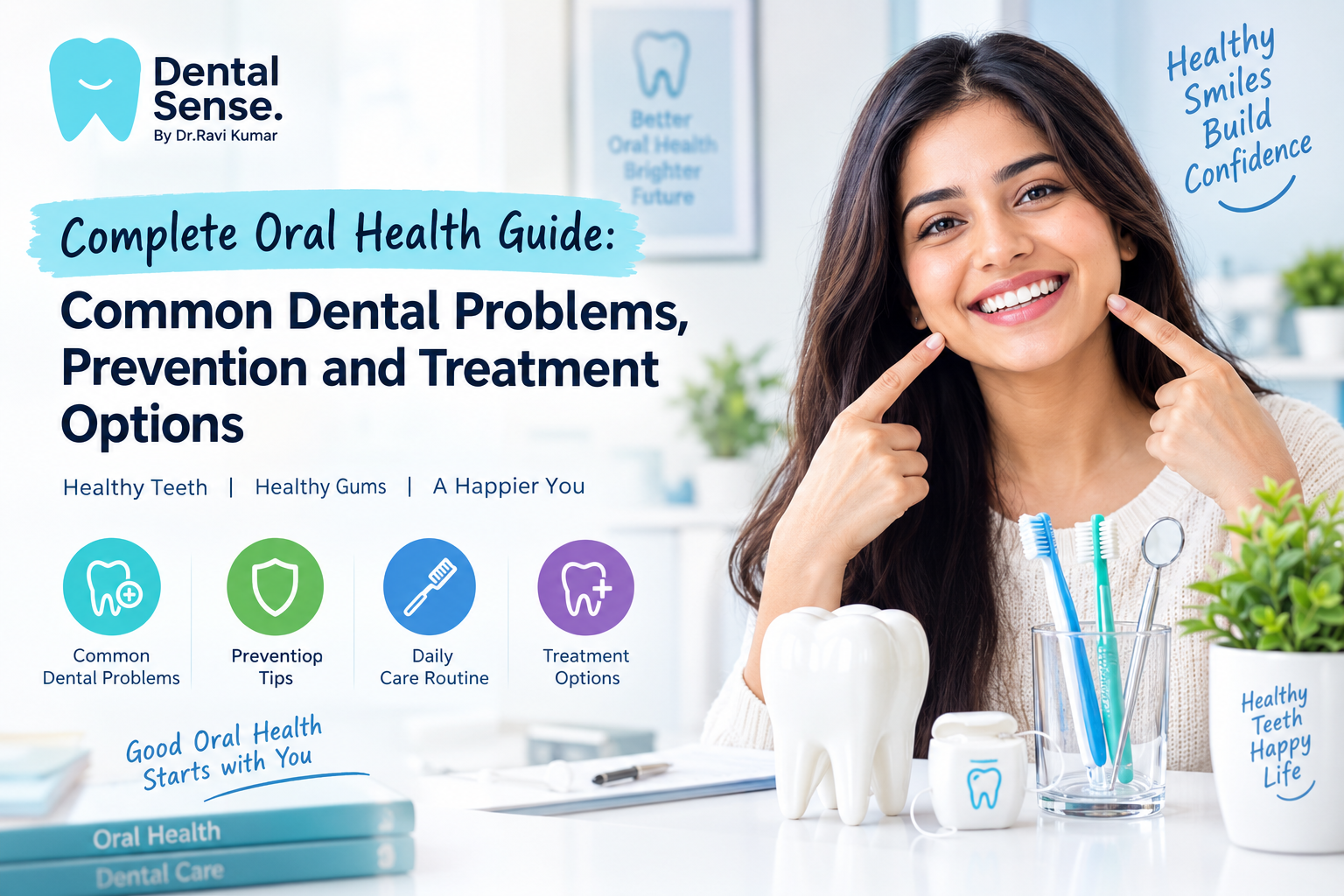
A healthy smile is not only about having clean and white teeth. Good oral health also means having healthy gums, a clean mouth and the ability to eat, speak and smile comfortably. Small dental problems can become more difficult when they are ignored for a long time. That is why simple daily dental care and timely check-ups matter.
According to the World Health Organization (WHO), oral diseases affect billions of people worldwide, and many common oral health conditions can be prevented or treated, especially when they are identified early.
This oral health guide explains common dental problems, useful oral health tips, daily hygiene habits and treatment options. If you live in Patna and want professional dental care, a regular dental examination can also help you understand your individual oral health needs.
What Is Oral Health and Why Does It Matter?
Oral health refers to the health of your mouth, teeth, gums and related structures. It affects everyday activities such as eating, speaking and smiling. Good oral health can also support your overall well-being.
Healthy teeth and gums usually need regular care. Brushing removes plaque from the surfaces of your teeth, while cleaning between the teeth helps reach areas that a toothbrush may miss.
A simple oral hygiene routine can help reduce the risk of common problems such as tooth decay and gum disease.
If you are looking for professional dental care, you can learn more about Dental Sense and the dental services available in Patna.
What Are the Most Common Dental Problems?
Dental problems can affect people of different ages. Some start with mild symptoms, while others may cause noticeable pain or discomfort.
1. Tooth Decay and Cavities
Tooth decay develops when acids produced by bacteria damage the tooth over time. Frequent exposure to free sugars is an important risk factor for dental caries.
Common signs can include:
- Tooth sensitivity
- Pain while eating
- Visible spots or holes in a tooth
- Discomfort with hot or cold foods
- Food getting stuck repeatedly in one area
Treatment depends on how far the decay has progressed. Early-stage decay may sometimes be managed with fluoride-based care, while an established cavity may require a filling.
The best approach is not to wait until a small cavity becomes a painful dental problem.
2. Gum Disease
Healthy gums should not normally remain swollen, tender or frequently bleed during brushing.
Plaque is a sticky layer of bacteria that can build up around the teeth. If it is not removed properly, it can contribute to gum inflammation. Over time, hardened plaque, known as tartar or calculus, can make gum problems more serious.
Early gum disease is often called gingivitis. If gum disease progresses, it can affect the tissues and bone supporting the teeth.
Common warning signs include:
- Bleeding gums
- Red or swollen gums
- Persistent bad breath
- Tender gums
- Gum recession
- Loose teeth in advanced disease
Regular brushing, cleaning between the teeth and professional dental care can help manage gum health.
3. Tooth Sensitivity
Do you feel a sudden sharp sensation when you eat something cold, hot or sweet?
That may be tooth sensitivity. It can have different causes, including enamel wear, exposed tooth surfaces, gum recession or other dental conditions.
Occasional sensitivity may not always indicate a serious problem, but repeated or worsening sensitivity deserves professional attention. A dentist can check the teeth and identify the underlying cause.
4. Toothache
Tooth pain is one of the most common reasons people seek dental treatment.
A toothache can have several possible causes, including tooth decay, infection, damage to a tooth or gum-related problems. Pain relief may provide temporary comfort, but it does not necessarily address the reason behind the pain.
If tooth pain continues, becomes severe or affects eating and sleeping, arrange a dental examination rather than continuing to ignore it.
5. Bad Breath
Bad breath can sometimes be linked to food or temporary dryness of the mouth. However, persistent bad breath can also be associated with plaque, gum problems, tongue coating or other oral conditions.
Good daily oral hygiene should include cleaning the tongue and the spaces between your teeth. If bad breath continues despite good oral care, a dental check-up can help identify a possible cause.
6. Plaque and Tartar
Plaque is a soft, sticky film that contains bacteria. If plaque remains on the teeth, it can harden into tartar.
Brushing and cleaning between your teeth help control plaque. Once tartar has hardened, normal brushing cannot remove it completely, so professional dental cleaning may be needed.
This is one reason preventive dental care is useful even when your teeth do not hurt.
How Can You Prevent Common Dental Problems?
Good dental care does not have to be complicated. The most useful habits are the ones you can follow consistently.
Brush Your Teeth Twice a Day
Brush your teeth twice daily using fluoride toothpaste. Use gentle movements and clean the outer, inner and chewing surfaces of your teeth.
NIDCR recommends fluoride toothpaste because fluoride helps protect teeth against tooth decay.
Avoid brushing too aggressively. Hard scrubbing can irritate the gums and may contribute to tooth surface wear.
Clean Between Your Teeth
A toothbrush cannot effectively clean every space between teeth. Floss or another suitable interdental cleaner can help remove plaque from these areas.
Cleaning between teeth is an important part of an oral hygiene guide because plaque left around the gums can contribute to inflammation.
Keep Your Tongue Clean
The tongue can collect bacteria and food particles. Gently cleaning the tongue can be a useful part of your daily dental care routine.
Be Careful With Sugary Foods and Drinks
Frequent exposure to free sugars can increase the risk of tooth decay. WHO identifies free sugar consumption as an important risk factor for dental caries.
You do not need to make your diet complicated. Focus on balanced meals and avoid making sugary snacks and drinks a frequent part of your daily routine.
Drink Water Regularly
Water can help keep the mouth comfortable and supports normal saliva function. Choosing water instead of sugary drinks can also be a simple step towards better teeth care.
Avoid Tobacco Products
Tobacco use is an important risk factor for oral health problems. Avoiding tobacco can support better oral and general health.
What Is a Simple Daily Oral Hygiene Routine?
A practical routine is easier to maintain when it fits naturally into your day.
Morning
- Brush with fluoride toothpaste.
- Clean your tongue gently.
- Rinse your mouth if needed.
- Have a balanced breakfast.
During the Day
- Drink water regularly.
- Limit frequent sugary snacks and drinks.
- Keep up normal oral hygiene after meals when practical.
Before Bed
- Brush your teeth again.
- Clean between your teeth.
- Clean your tongue gently.
- Make your night-time brushing a regular habit.
The night-time routine is particularly important because it is easy to skip when you are tired. Building a fixed routine can make daily dental care much easier.
What Are the Treatment Options for Common Dental Problems?
Dental treatment depends on the specific problem, its severity and the condition of the tooth or gums.
Treatment for Cavities
A dentist may recommend a filling when a cavity has formed. In suitable early cases, fluoride treatment may help stop or reverse early decay before a cavity develops.
Treatment for Gum Problems
Treatment can range from improved daily oral hygiene and professional cleaning to more specific periodontal treatment when gum disease has progressed.
NIDCR notes that treatment depends on the extent of gum disease and may include professional cleaning procedures for affected areas.
Treatment for Tooth Sensitivity
The first step is finding the cause. Depending on the reason, a dentist may recommend changes to oral hygiene, suitable dental products or treatment for the underlying dental problem.
Treatment for Tooth Pain
Tooth pain should be assessed rather than simply ignored. Treatment may involve addressing decay, infection, damage or another dental cause.
There is no single dental treatment that works for every type of tooth pain. A proper examination helps determine the right approach.
When Should You Visit a Dentist?
You should consider a dental examination if you notice:
- Persistent tooth pain
- Bleeding or swollen gums
- Ongoing tooth sensitivity
- A broken or damaged tooth
- Persistent bad breath
- Pain while chewing
- Visible cavities
- Swelling around the mouth or jaw
- Loose permanent teeth
- A dental problem that keeps returning
You do not always need to wait for severe pain before seeing a dentist. Preventive dental care can help identify problems earlier and support long-term oral health.
For people looking for a Dental Clinic in Patna, Dental Sense provides dental care services designed around different oral health needs.
How Can Families Maintain Better Oral Health in Patna?
Dental care works best when it becomes a family habit.
Parents can encourage children to brush regularly and learn proper oral hygiene from an early age. Adults should also pay attention to changes in their teeth and gums instead of waiting for a major problem.
For children who need specialised dental attention, parents can explore the Kids Dentist services at Dental Sense and discuss their child’s dental needs with a qualified dental professional.
Adults may also require different types of care at different stages of life. For example, someone looking for tooth replacement options can explore Complete Dentures in Patna, while people considering orthodontic treatment can learn more about Clear Aligners and discuss whether they are suitable for their individual needs.
The goal is simple: do not treat dental care as something you need only when a tooth hurts. Make oral hygiene part of your normal health routine.
Key Takeaways for Better Oral Health
A healthy mouth starts with simple habits that you can follow every day.
- Brush your teeth twice daily with fluoride toothpaste.
- Clean between your teeth regularly.
- Keep your tongue clean.
- Limit frequent sugary foods and drinks.
- Avoid tobacco products.
- Pay attention to changes in your teeth and gums.
- Do not ignore persistent tooth pain or sensitivity.
- Get professional dental care when you need it.
- Maintain regular dental check-ups based on your individual needs.
Good oral health is not about achieving a perfect smile overnight. It is about consistent care and timely attention when something changes.
Frequently Asked Questions About Oral Health
What is the best way to maintain good oral health?
The basic approach is simple: brush twice daily with fluoride toothpaste, clean between your teeth, maintain a balanced diet, limit frequent sugary foods and drinks, avoid tobacco and seek professional dental care when needed.
How can I prevent cavities?
Regular brushing with fluoride toothpaste, cleaning between your teeth and limiting frequent exposure to sugary foods and drinks can help reduce the risk of tooth decay. Regular dental examinations can also help identify early problems.
Why do my gums bleed when I brush?
Bleeding gums can be a sign of gum inflammation. Plaque buildup around the teeth can contribute to gingivitis, which may cause gums to become red, swollen and prone to bleeding. Persistent bleeding should be discussed with a dental professional.
How can I keep my teeth and gums healthy?
Follow a consistent daily oral hygiene routine. Brush twice a day, clean between your teeth, keep your tongue clean, make balanced food choices and seek dental care when you notice persistent symptoms.
When should I see a dentist for tooth pain?
If tooth pain continues, returns repeatedly, becomes severe or affects eating or sleeping, arrange a dental examination. Tooth pain can have different causes, so the right treatment depends on the underlying problem.
Can gum disease be prevented?
Many forms of gum disease can be reduced through good oral hygiene and professional dental care. Removing plaque regularly is important because plaque buildup can contribute to gum inflammation and disease.
Final Thoughts
Taking care of your teeth does not require a complicated routine. A few consistent habits can make a meaningful difference: brush regularly, clean between your teeth, watch your diet and pay attention to changes in your mouth.
At the same time, home care cannot replace professional dental assessment when a problem develops. If you have ongoing tooth pain, bleeding gums, sensitivity or another dental concern in Patna, consider speaking with a qualified dental professional.
For dental care and personalised guidance, you can visit Dental Sense in Patna and discuss your oral health concerns with the dental team.