
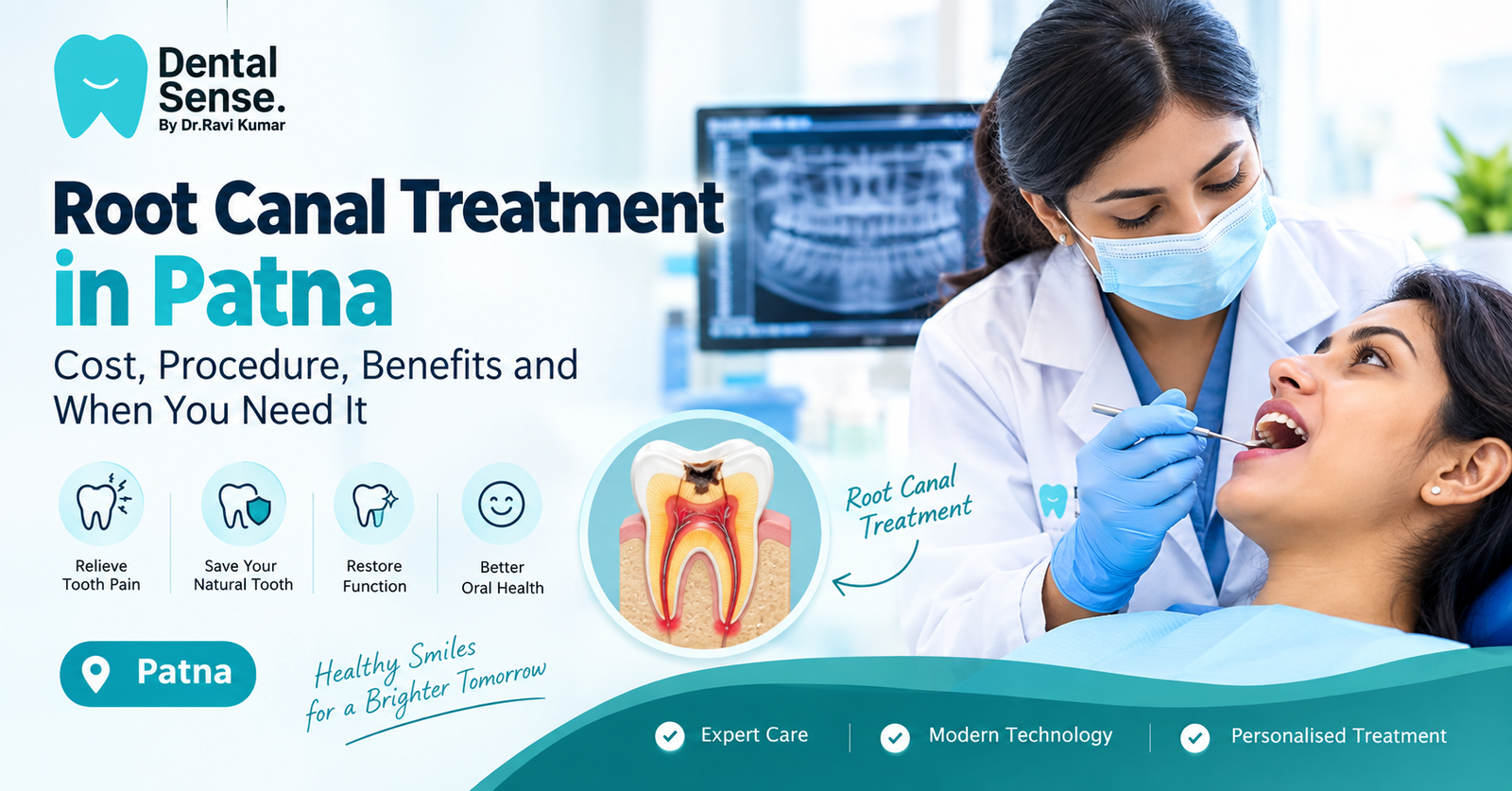
A toothache can start as a small irritation and slowly become a problem that affects your daily routine. You may feel pain while eating, become sensitive to hot or cold drinks, or notice swelling around a tooth. Sometimes, these symptoms point to a problem inside the tooth that cannot be fixed with a simple filling.
This is where root canal treatment in Patna may become an option.
Root canal treatment, also called RCT, is a dental procedure used to treat a tooth when the pulp inside it becomes infected or damaged. The dentist removes the affected pulp, cleans the inside of the tooth, seals the root canals, and restores the tooth.
But does every toothache need an RCT? Is the procedure painful? How much does it cost in Patna? And how long does it take?
Let’s look at these questions one by one.
What Is Root Canal Treatment?
Root canal treatment is a procedure that removes infected or damaged pulp from inside a tooth. The dentist then cleans, disinfects, and seals the root canals to help preserve the natural tooth.
The inside of a tooth contains soft tissue called dental pulp. It contains nerves and blood vessels. Deep decay, cracks, or injury can allow bacteria to reach this area.
When the pulp becomes infected or badly damaged, the dentist may recommend root canal treatment.
The purpose of RCT is not simply to stop tooth pain. The treatment aims to remove the source of infection while keeping the natural tooth whenever the tooth can be restored.
What Part of the Tooth Does RCT Treat?
A tooth has several layers. The outer enamel protects it, while dentin forms the layer underneath. The pulp sits inside the tooth and extends down through the root canals.
Root canal treatment focuses on this inner pulp and root canal system.
After the infected tissue is removed, the dentist cleans and seals the canals. The tooth is then restored so that it can function properly.
When Is a Root Canal Needed?
Not every toothache means that you need a root canal. A dentist needs to examine the tooth and identify the actual cause of the problem.
RCT may be recommended when the pulp inside a tooth is infected, inflamed, or damaged.
Some common signs include:
Severe or Persistent Tooth Pain
Pain that continues for a long time or keeps coming back should not be ignored. Pain can become more noticeable while chewing or biting.
Sensitivity to Hot or Cold
If a tooth remains sensitive after you finish eating or drinking something hot or cold, it may indicate a deeper problem.
Pain While Chewing
Pain when you bite down can occur when the tissue inside or around a tooth is affected.
Swelling Around the Tooth
Swelling near a particular tooth can be a sign of infection. It is important to get it checked rather than waiting for it to settle on its own.
Deep Tooth Decay
A small cavity may sometimes be treated with a filling. If decay reaches the pulp, however, a more extensive treatment may be required.
Cracked or Damaged Tooth
A crack can allow bacteria to reach the inner part of the tooth. Depending on the extent of the damage, the dentist may consider root canal treatment.
Tooth Discoloration
A tooth that becomes darker than the surrounding teeth can sometimes indicate damage to the pulp. A dental examination is needed to find the actual cause.
Remember: symptoms alone cannot confirm that you need an RCT. Your dentist may use a clinical examination and dental X-ray to make the diagnosis.
How Does Root Canal Treatment Work?
Many patients feel nervous because they do not know what will happen during the procedure. Understanding the basic steps can make the process easier.
Step 1: Dental Examination
The dentist first examines the affected tooth. They may ask about your pain, sensitivity, and other symptoms.
An X-ray may also be recommended to check the roots and surrounding area.
Step 2: Local Anesthesia
The dentist uses local anesthesia to numb the area before treatment. This helps control discomfort during the procedure.
Step 3: Accessing the Tooth
The dentist creates a small opening in the tooth to reach the infected or damaged pulp.
Step 4: Removing the Infected Pulp
The damaged or infected pulp is carefully removed from inside the tooth.
Step 5: Cleaning the Root Canals
The root canals are cleaned and prepared to remove remaining infected material and reduce bacteria inside the tooth.
Step 6: Filling and Sealing
After cleaning, the canals are filled and sealed. This helps prevent bacteria from entering the treated area again.
Step 7: Restoring the Tooth
The tooth may need a filling or dental crown after the root canal. The dentist will recommend the appropriate restoration based on the tooth’s condition.
A crown is often considered when the tooth needs additional protection after treatment.
Is Root Canal Treatment Painful?
This is one of the first questions many patients ask before starting treatment.
Modern root canal treatment is performed under local anaesthesia, which helps control discomfort during the procedure. Some patients may experience mild sensitivity or discomfort after treatment.
The experience can vary from person to person. The condition of the tooth and the level of infection can also affect how you feel before and after treatment.
If you have significant or persistent discomfort after an RCT, speak with your dentist so they can check the tooth.
How Much Does Root Canal Treatment Cost in Patna?
The root canal treatment cost in Patna is not the same for every patient. The final amount depends on the tooth being treated and the treatment it requires.
Some factors that can affect the cost include:
- Location of the tooth
- Number of root canals
- Severity of infection
- Complexity of the case
- Dental X-rays or other diagnostic requirements
- Type of filling
- Whether a dental crown is required
- Type of crown or restoration selected
For this reason, it is better to get an examination before relying on an online price.
If you are comparing the RCT treatment cost in Patna, also ask what the quoted price includes. A basic RCT price may not always include the final crown or other restoration.
Does Root Canal Cost Include a Crown?
Not necessarily.
The need for a crown depends on the condition and location of the tooth. Some teeth may require additional protection after RCT, while the restoration may differ in other cases.
Your dentist can explain the recommended restoration and its cost before treatment begins.
How Long Does Root Canal Treatment Take?
There is no single treatment time that applies to every tooth.
Some straightforward cases may be completed in one appointment. Other cases can require more visits depending on the infection, tooth anatomy and overall condition of the tooth.
The final restoration may also require a separate appointment.
During your consultation, the dentist can give you a better idea of how many visits your particular case may require.
What Are the Benefits of Root Canal Treatment?
When RCT is suitable for a damaged or infected tooth, it can provide several important benefits.
It Can Help Preserve the Natural Tooth
One of the main goals of RCT is to treat the inside of the tooth while keeping the natural tooth in place.
It Treats the Affected Pulp
The dentist removes the infected or damaged pulp and cleans the root canals.
It Helps Restore Tooth Function
Once the tooth is properly restored, it can continue to support normal chewing.
It Can Address Infection Inside the Tooth
Cleaning and sealing the root canals helps deal with the source of infection inside the tooth.
It May Avoid Immediate Extraction
When a tooth can be restored successfully, RCT can be an alternative to removing it.
The dentist should always assess the tooth before recommending a treatment.
How Long Does a Root Canal-Treated Tooth Last?
There is no fixed lifespan that applies to every root canal-treated tooth.
The long-term condition of the tooth can depend on several factors, including:
- Quality of the root canal treatment
- Proper restoration
- Oral hygiene
- Regular dental check-ups
- Condition of the tooth before treatment
- Avoiding excessive stress on the restored tooth
A properly treated and restored tooth can continue to function for many years. Regular dental care helps protect the treated tooth and your overall oral health.
What Happens If an Infected Tooth Is Not Treated?
An infected tooth may not heal on its own.
If the underlying problem is left untreated, the infection can continue and may cause increasing pain, swelling, or problems around the affected tooth.
A tooth that becomes more severely damaged may also become harder to restore.
If you have persistent tooth pain, swelling, or sensitivity, getting a dental examination early can help identify the problem and available treatment options.
Root Canal Treatment vs. Tooth Extraction: Which Is Better?
RCT and tooth extraction serve different purposes.
Root canal treatment aims to clean and preserve a natural tooth. Extraction removes the tooth completely.
If a tooth can be restored successfully, a dentist may consider treatment that allows you to keep the natural tooth. However, some severely damaged teeth may not be suitable for RCT.
The right decision depends on the condition of your tooth.
| Root Canal Treatment | Tooth Extraction |
| Treats the inside of the tooth | Removes the tooth |
| Aims to preserve the natural tooth | A natural tooth is removed. |
| The tooth is restored after treatment. | Tooth replacement may be considered. |
| Suitable for teeth that can be restored | May be considered for severely damaged teeth |
A dentist can explain the advantages and limitations of each option after examining your tooth.
How to Choose a Root Canal Dentist in Patna?
Choosing a root canal dentist in Patna should not be based only on price.
Before starting treatment, consider the following:
Check the Dentist’s Experience
Ask about the dentist’s experience with root canal procedures and the type of treatment required for your tooth.
Understand the Diagnosis
A proper examination helps determine whether you actually need an RCT.
Ask About the Complete Cost
Find out whether the quoted amount includes consultation, X-rays, RCT, filling and crown or other restoration.
Understand the Treatment Plan
Your dentist should explain the basic steps, expected visits and restoration options.
Consider the Clinic’s Facilities
Clean treatment areas, appropriate dental equipment and proper sterilisation practices are important parts of good dental care.
Look Beyond Online Reviews
Reviews can provide useful information about patient experiences, but they should not replace professional clinical advice.
How to Care for Your Tooth After Root Canal Treatment
Good aftercare helps protect the treated tooth.
Follow the instructions given by your dentist and maintain your regular oral hygiene routine.
You should also:
- Brush your teeth regularly.
- Clean between your teeth as recommended.
- Avoid putting unnecessary pressure on the treated tooth before the final restoration is completed.
- Attend follow-up appointments.
- Get the recommended crown or restoration if your dentist advises it.
- Contact your dentist if you develop significant pain or swelling.
A root canal does not mean you can stop caring for the treated tooth. Daily oral hygiene remains important.
Frequently Asked Questions About Root Canal Treatment in Patna
What Is Root Canal Treatment?
Root canal treatment removes infected or damaged pulp from inside a tooth. The dentist then cleans, disinfects and seals the root canals before restoring the tooth. The treatment aims to address the internal problem and preserve the natural tooth when it can be restored.
When Is a Root Canal Needed?
A root canal may be needed when the pulp inside a tooth becomes infected, inflamed or damaged. Persistent tooth pain, prolonged hot or cold sensitivity, swelling and pain while chewing can be warning signs. A dentist must examine the tooth before confirming the need for RCT.
How Does Root Canal Treatment Work?
During RCT, the dentist examines the tooth, numbs the area, accesses the inside of the tooth, removes the affected pulp, cleans the root canals and seals them. The tooth is then restored with an appropriate filling or crown when required.
How Much Does Root Canal Treatment Cost in Patna?
The cost varies depending on the tooth, number of canals, infection, treatment complexity and final restoration. A dental examination is the best way to get an accurate estimate. Patients should also ask whether the quoted price includes the crown and other required procedures.
Is Root Canal Treatment Painful?
Local anesthesia is used during root canal treatment to help control discomfort. Some patients may experience mild sensitivity or discomfort after the procedure. If pain remains significant or does not improve, contact your dentist for an evaluation.
How Long Does a Root Canal Treatment Take?
The duration depends on the tooth and the complexity of the case. Some treatments may be completed in one visit, while others require multiple appointments. The dentist can provide a more specific timeline after examining the affected tooth.
How Long Does a Root Canal Treated Tooth Last?
A root canal-treated tooth can remain functional for many years when it receives proper treatment and restoration. Oral hygiene, regular dental check-ups and protecting the restored tooth also play an important role in its long-term condition.
What Happens If an Infected Tooth Is Not Treated?
An untreated dental infection can continue to affect the tooth and surrounding tissues. Pain and swelling may develop or become worse, and the tooth may become more difficult to restore. Professional dental evaluation can help identify the cause and appropriate treatment.
How Many Visits Are Needed for RCT?
The number of visits depends on the tooth, infection and treatment complexity. Some cases can be completed in one appointment, while others require more visits. Your dentist can explain the expected treatment schedule after examination.
Is RCT Better Than Tooth Extraction?
Neither option is automatically better for every patient. RCT aims to preserve a natural tooth that can still be restored, while extraction removes the tooth. A dentist should assess the tooth and discuss the suitable options with you.
Key Takeaways
- Root canal treatment is used to treat certain infected or damaged teeth.
- Persistent pain, sensitivity, swelling, and pain while chewing can require dental evaluation.
- RCT involves removing affected pulp, cleaning the canals, and sealing the tooth.
- Local anesthesia helps control discomfort during the procedure.
- The root canal treatment cost in Patna depends on the individual case and restoration required.
- Some RCT cases need one appointment, while others require multiple visits.
- A crown may be recommended to protect the treated tooth.
- Early dental evaluation can help determine whether RCT or another treatment is appropriate.
- Good oral hygiene and regular dental check-ups remain important after RCT.
Looking for Root Canal Treatment in Patna?
If you have persistent tooth pain, sensitivity, swelling or pain while chewing, do not try to manage the problem without finding its cause.
Dental Sense can examine your tooth, identify the dental problem and explain the treatment options available for your case. If root canal treatment is appropriate, the dentist can also discuss the expected procedure, treatment timeline and associated cost.